
Table of Contents
Revenue growth is often viewed as a sign of success by service businesses.
More clients, more projects, and higher revenue should lead to higher profits.
However, many service businesses have a different experience. They notice revenue increases, but margins remain the same or even begin to decline.
The reason is simple. Revenue can tell you how much money is coming into your business, but it fails to show how efficiently work is being delivered.
Research by U.S. Bank shows that more than 82% of business failures are linked to poor cash flow management.
Another study by Quickbase has found that 58% of employees spend less than half their workweek on meaningful work that drives results.
Such challenges typically arise from a lack of profitability visibility
This is why profitability analysis has become increasingly important for growing organizations. It helps you understand where profits are generated and where margins are being lost.
This article explores why revenue growth alone is not a strong indicator of business health and how better visibility helps protect margins.
Understanding the Revenue Profitability Gap
When business grows, operations become more complex.
- Higher delivery costs
- Increased operational overhead
- Greater demand for resources
- Increased project complexity
Revenue reveals how much money comes in.
But it does not show:
- Which projects make money
- Which clients are most profitable
- How resources are being used
- Whether delivery costs are increasing
This is where many growing businesses lose margin.
Strong revenue management practices help businesses connect revenue growth with actual profitability outcomes rather than relying on revenue numbers alone.
Why Revenue Alone Is Not Enough
Revenue is only one part of business performance.
A business can generate high revenue and still struggle with low profits.
To better understand profitability, you need answers to questions like:
- Which projects generate the highest margins?
- Which clients are most profitable?
- Where is non-billable work increasing?
- Which teams are nearing capacity?
- Which projects are at risk of overruns?
- Where are costs increasing?
If these answers are unclear, your business is exposed to profit risks.
Regular project profitability analysis helps businesses understand which projects contribute the most to margins. Similarly, product profitability analysis helps organizations evaluate which products or services create the greatest financial value.
How Lack of Visibility Reduces Profitability
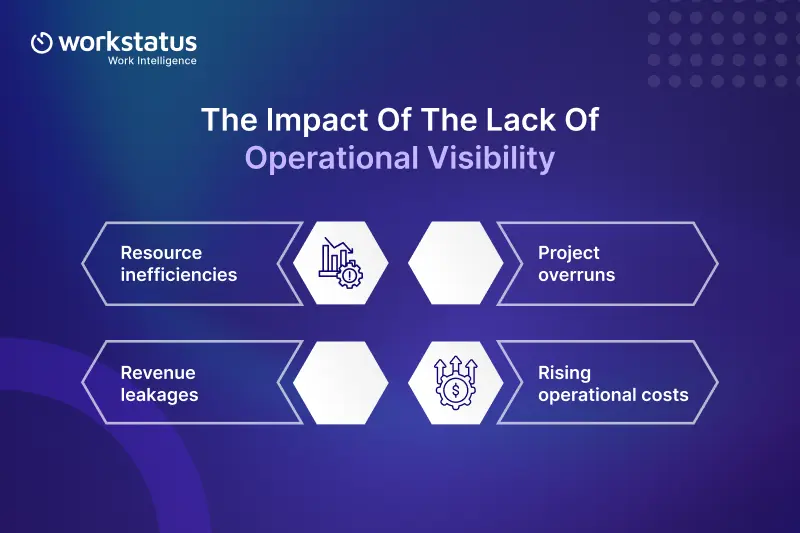
Revenue growth sometimes comes with hidden challenges that reduce profits. Here are some common problems that arise due to a lack of visibility.
1. Resource Inefficiencies
Lack of visibility often gives rise to resource inefficiencies. Some employees become overloaded while others have unused capacity. It hurts employee productivity and delivery performance.
Many businesses use employee productivity tracking tools to gain better visibility into how work is distributed across teams.
2. Project Overruns
When projects are not tracked effectively, even small delays can turn into costly mistakes. When there is a lack of visibility, issues often go unnoticed until they have already affected the budgets and the project timelines.
3. Revenue Leakage
Untracked work, missed billable hours, and scope changes can reduce project profitability.
Effective billable hours tracking helps businesses ensure that all client work is properly captured and billed.
4. Rising Operational Costs
As businesses grow, it becomes difficult to manage costs without clear operational visibility.
Small inefficiencies can compound over time, reducing margins even as revenue increases.
Why Visibility Improves Profitability
Visibility helps businesses understand what affects profits.
It provides insight into:
- Project profitability
- Client profitability
- Resource utilization
- Workforce productivity
- Delivery performance
- Capacity planning
Many businesses rely on profitability analytics to identify risks and improve financial performance.
With better visibility, you can spot issues sooner and take action before margins are affected.
How Visibility Supports Sustainable Growth
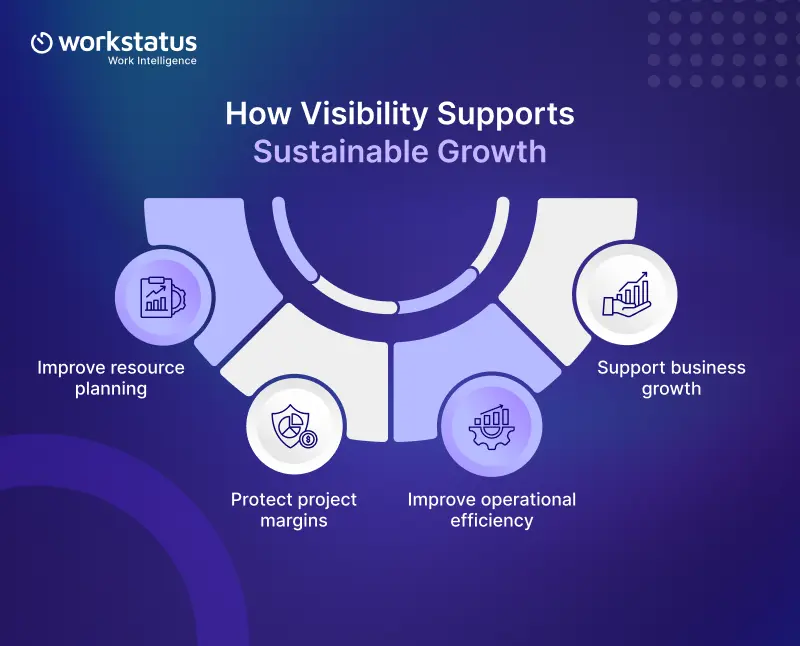
Businesses that grow profitably track both revenue and operations.
With better visibility, they can:
1. Improve Resource Planning
- Balance workloads effectively.
- Use team capacity wisely.
- Avoid over- or under-allocation.
2. Protect Project Margins
- Identify cost overruns early.
- Track project progress.
- Address risks before they escalate.
3. Improve Operational Efficiency
- Reduce non-billable work.
- Improve resource utilization.
- Eliminate workflow bottlenecks.
4. Support Business Growth
- Make decisions with accurate data.
- Plan growth with confidence.
- Scale operations without losing profitability.
A strong business growth strategy depends on understanding how projects, resources, and operational performance impact profitability.
From Visibility to Action: A Real Example
A 75-person creative agency landed 5 new clients in 12 months. Revenue jumped 32% from $3.2M to $4.2M.
The partners were excited. Then September came, and things fell apart.
They couldn’t deliver on time. Teams were constantly working overtime. And when they checked the financials, they realized they were actually making less profit than the year before.
What they didn’t see:
- Which projects were consuming the most hours
- Which clients had the highest scope creep
- How many billable hours were buried in “admin” or “revisions”
- Whether designers were overbooked while account managers had free time
They had revenue numbers. They had no clue where the money was actually going.
What changed when they got visibility:
Track time against specific client projects and deliverables (not just daily timesheets). See which clients required 40 hours per week and which actually needed 20. Identify that one “profitable” client was generating 60+ hours of untracked revision work every week. They redistributed the team, so billable work came first, and admin work fit around it. They also renegotiated scope with that one client to match the actual hours being spent
The result:
Margins went from 14% to 22% within 6 months. Revenue stayed at $4.2M. They delivered faster, and their team stopped burning out.
This is what visibility actually does. It shows you where your time is really going so you can protect the profit that revenue creates.
Workstatus: Turn Project Visibility Into Profitability
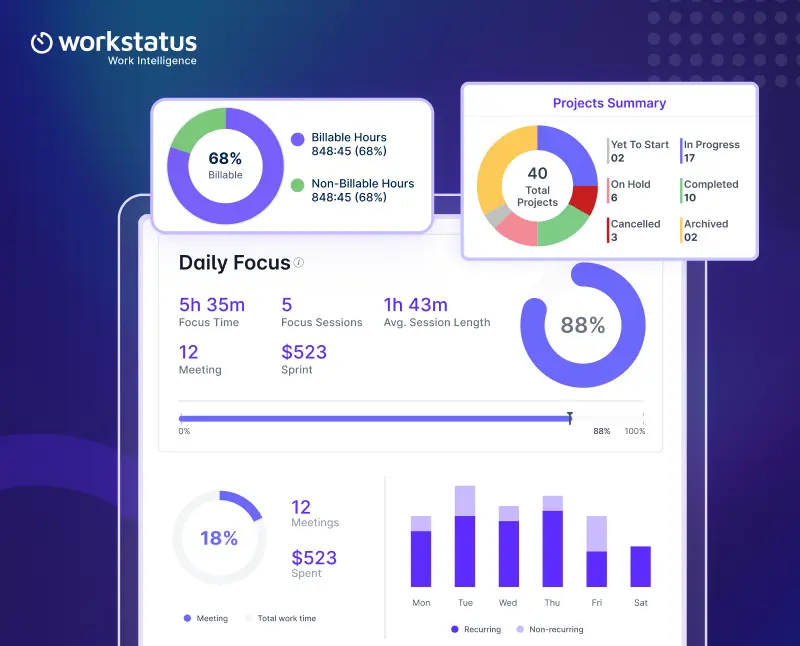
Revenue growth doesn’t always indicate profits. Workstatus helps businesses understand how time, effort, and resources are being used. This helps teams control costs and improve margins.
Improve Billable Hours Tracking
Compare planned and actual hours. Make sure client work is captured and billed correctly. It is a widely adopted time-tracking software that helps teams record work accurately and reduce missed billing opportunities.
Track Resource Utilization and Capacity
See who is overloaded and who has available capacity. Balance workloads more effectively using resource utilization software and workforce insights.
Improve Resource Allocation
Ensure the right people are assigned to the right projects. This tried-and-tested resource allocation software helps you make staffing decisions based on workloads and availability.
Manage Project Costs
Track project progress, resource usage, and scope changes. Address issues before costs increase through better project cost management practices.
Improve Project Profitability
Monitor budgets, timelines, and team effort with widely used project intelligence software.
Understand which projects perform well and which need attention through effective project profitability management.
Make Better Decisions
Use Gantt charts and productivity data to track progress and make better decisions. Solutions such as workflow intelligence software provide deeper operational visibility to support faster decision-making.
Final Thoughts
Revenue growth is crucial for any business. However, revenue alone does not indicate profitability.
When there is a lack of operational visibility, profits can decline even if revenue appears to be growing. One needs visibility into projects, resources, billable work, and delivery costs to get a clear picture.
When you gain visibility into where time, money, and effort are spent, you are better positioned to protect margins and grow sustainably. By using Solutions such as Work intelligence software, you can gain deeper operational visibility for quick and effective decision-making.
FAQ
1. How does revenue visibility improve profitability?
Ans. Revenue visibility shows the sources of revenue and where profits are being lost. It helps you make better decisions to improve margins.
2. What causes revenue leakage in growing businesses?
Ans. Revenue leakages are typically caused by factors like unbilled work, missed billable hours, and scope creep.
3. Why is operational visibility important?
Ans. Operational visibility is crucial for businesses as it helps them manage resources effectively and improve profitability.
4. How can businesses improve profit margins?
Ans. Businesses can improve margins by increasing billable work, reducing waste, controlling costs, improving resource utilization, and closely monitoring project performance.
5. Why is project visibility important?
Ans. Project visibility helps you track progress, manage budgets, identify risks early, and prevent overruns.
6. How do you measure profitability?
Ans. The easiest way to calculate profit margins is to compare revenue against total costs.
7. How does time tracking improve profitability?
Ans. With time tracking, you can easily capture billable hours, improve project budgeting, and reduce revenue leakage. This, in turn, helps to improve overall profitability.
8. What is margin intelligence?
Ans. Margin Intelligence™ is the analysis of revenue, costs, utilization, and project performance to identify opportunities to improve profitability.