
Table of Contents
Can workforce data actually help businesses grow?
With work intelligence, organizations can transform everyday work data into actionable insights that improve productivity, workforce planning, and overall business performance.
In this blog, you’ll explore how the workforce intelligence tool works and how it helps businesses turn work data into measurable outcomes.
Let’s go!!
What is Workforce Intelligence?
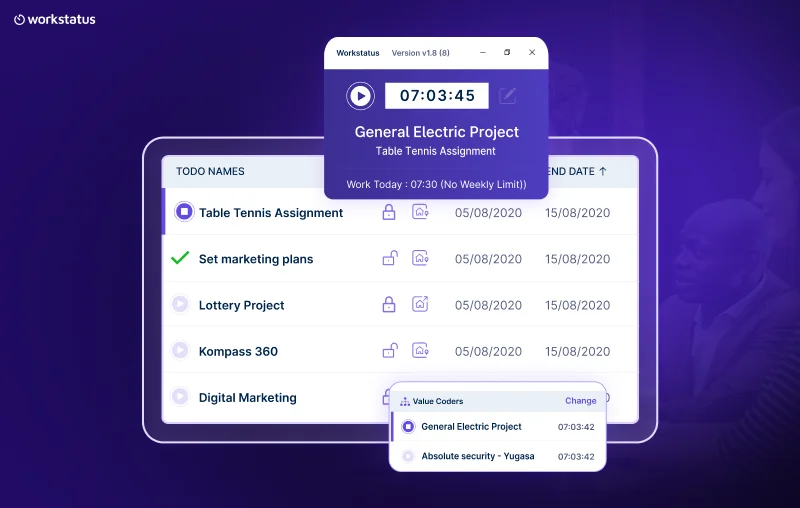
Workforce intelligence helps businesses understand how employees work across teams, projects, and daily tasks.
It uses work data to help companies make better decisions, improve productivity, and increase overall business performance.
Key parts of workforce intelligence:
- Tracking employee productivity and work habits
- Monitoring attendance, work hours, and project progress
- Finding workflow problems and ways to improve efficiency
- Helping managers make smart, data-based decisions
- Giving better visibility into remote, hybrid, and office teams
Today, many businesses use workforce intelligence to work smarter and improve results. It helps companies do more than just track work; it helps them improve how work gets done.
Why Workforce Analysis Data Matters?
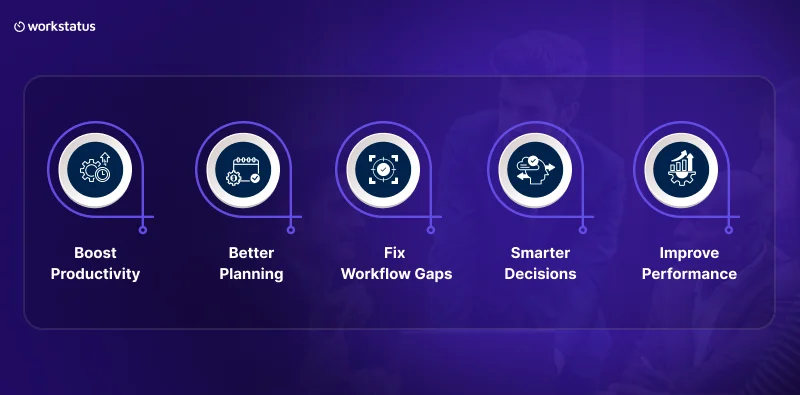
Workforce data helps businesses understand how employees work across teams, projects, and daily tasks.
It gives useful insights that help companies improve productivity, efficiency, and business performance.
Workforce data helps businesses:
- Improve employee productivity and work efficiency
- Plan workloads and resources more effectively
- Identify workflow issues and project delays
- Make smarter business and workforce decisions
- Improve overall team and company performance
Without workforce data, businesses often rely on guesswork instead of real information.
Using accurate work data helps organizations work smarter, improve operations, and achieve better results.
Key Components of Workforce Intelligence
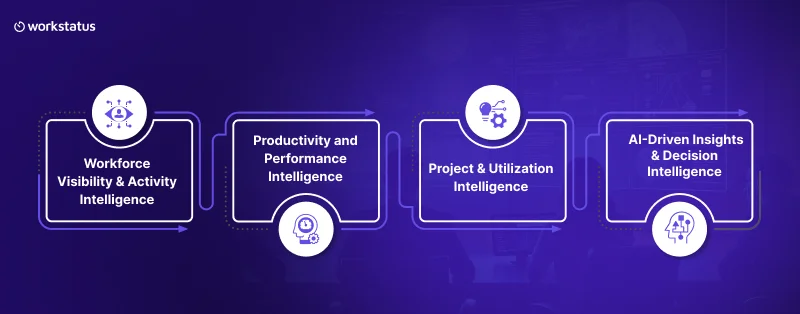
Workforce Intelligence is the process of turning workforce data into actionable business insights that improve productivity, efficiency, utilization, and operational decision-making.
It goes beyond basic time tracking by connecting people, projects, performance, and outcomes into a unified intelligence layer.
Here are the top core components of workforce intelligence:
1. Workforce Visibility & Activity Intelligence
The foundation of workforce intelligence starts with understanding how work happens across teams, projects, and locations.
By capturing real-time workforce activity, businesses gain complete visibility into employee operations and work patterns.
Includes:
- Time tracking
- Attendance monitoring
- Employee activity insights
- Remote & field workforce visibility
Business Outcome: Improves operational transparency, accountability, and workforce coordination.
2. Productivity & Performance Intelligence
Productivity intelligence transforms raw work data into measurable productivity and performance insights.
Organizations can evaluate efficiency, identify bottlenecks, and optimize team output using data-driven analytics.
Includes:
- Productivity analytics
- Team performance tracking
- Efficiency benchmarking
- Work pattern analysis
Business Outcome: Drives higher productivity, better employee performance, and improved operational efficiency.
3. Project & Utilization Intelligence
Connecting workforce data with project execution helps organizations maximize utilization and profitability.
This pillar focuses on how employee time and resources impact delivery outcomes and business performance.
Includes:
- Billable vs non-billable tracking
- Resource allocation
- Capacity planning
- Utilization analytics
- Project performance insights
Business Outcome: Enhances project profitability, improves resource optimization, and ensures predictable delivery.
4. AI-Driven Insights & Decision Intelligence
Modern workforce intelligence platforms unify workforce data and convert it into actionable business insights through dashboards, reporting, and predictive analytics.
Includes:
- Real-time dashboards
- Automated reporting
- Predictive workforce analytics
- AI-powered recommendations
- Integrated workforce data systems
Business Outcome: Enables faster decision-making, proactive workforce planning, and smarter business strategies.
How Organizations Collect and Analyze Work Data
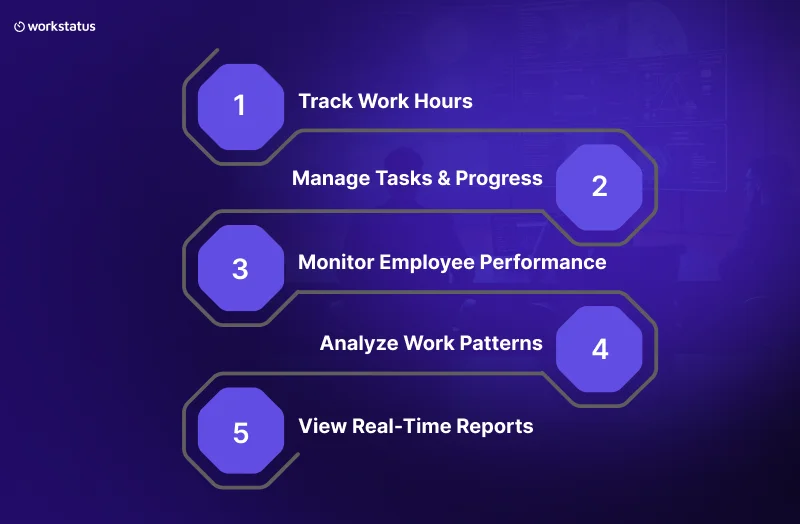
Organizations use digital tools and workforce software to collect and study work data.
This helps businesses understand how employees work, manage projects, and improve productivity.
Businesses collect work data by:
- Using time intelligence tools to record work hours and attendance
- Tracking tasks, deadlines, and team progress with project management tools
- Monitoring work activities and employee performance with productivity tools
- Using workforce analytics to find work patterns and improve efficiency
- Viewing reports and dashboards to track team performance in real time
By collecting and studying workforce data regularly, businesses can manage teams better, improve efficiency, and make smarter decisions.
The Role of Workstatus in Workforce Intelligence
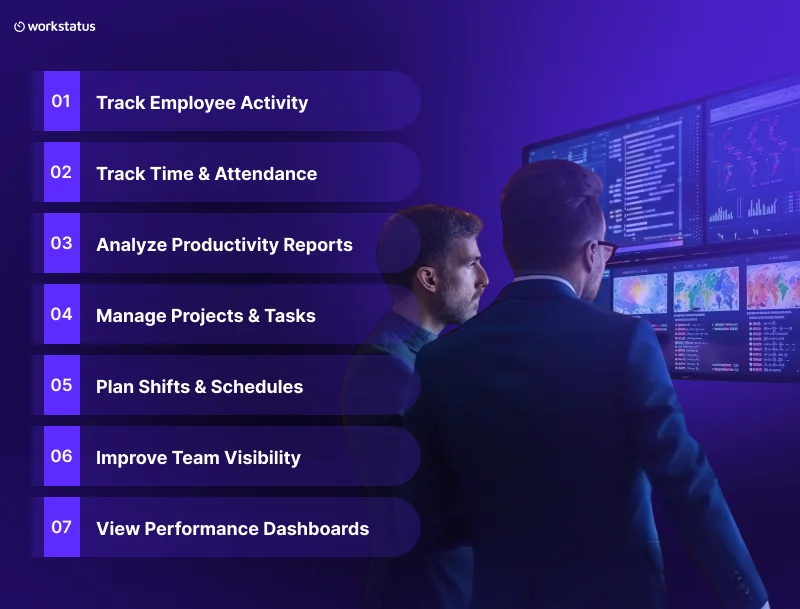
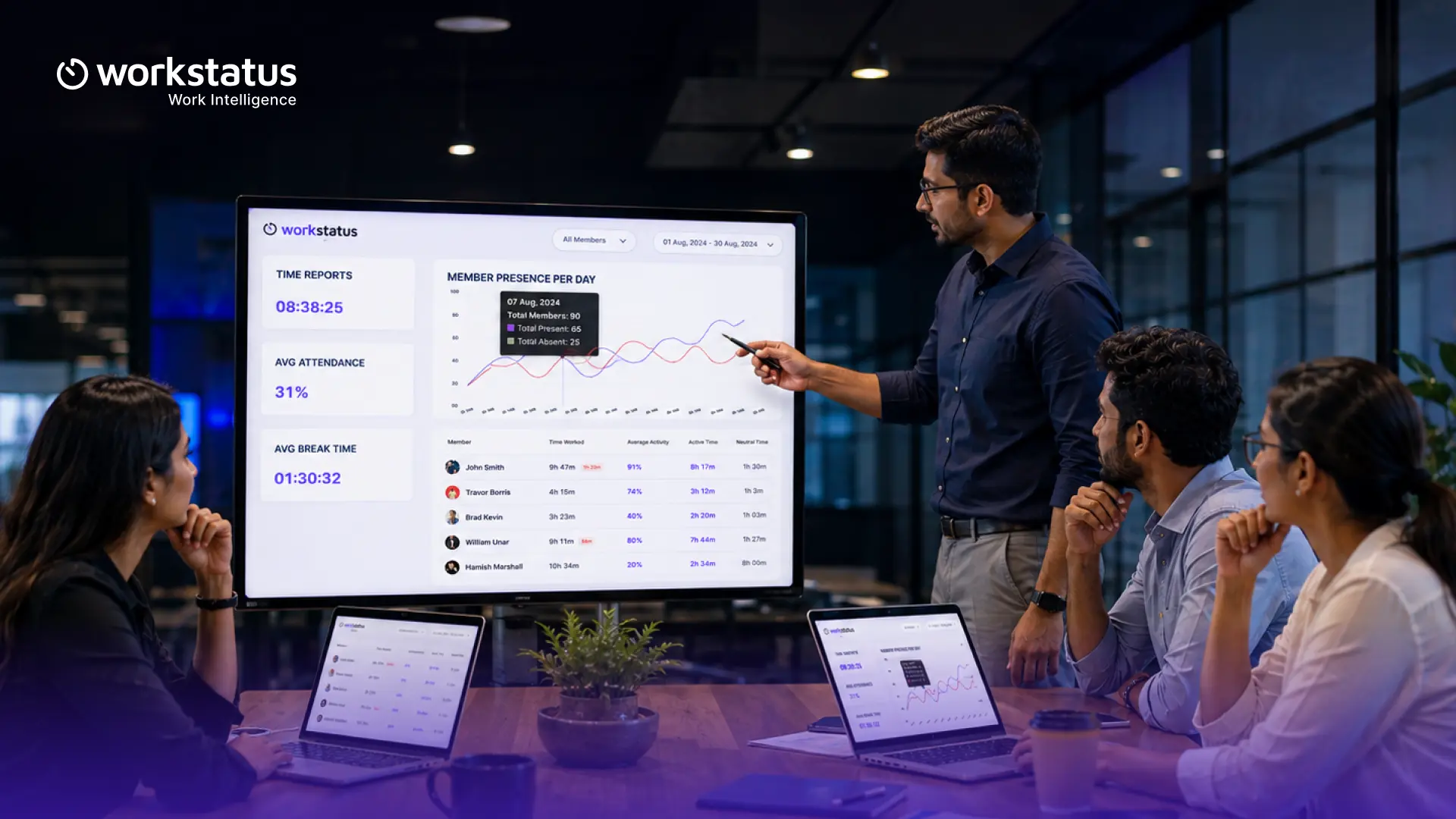
Workstatus helps businesses understand, manage, and improve how work gets done across teams and projects.
It provides smart workforce tools that help companies track employee performance, improve productivity, and make better business decisions.
Workstatus helps businesses with:
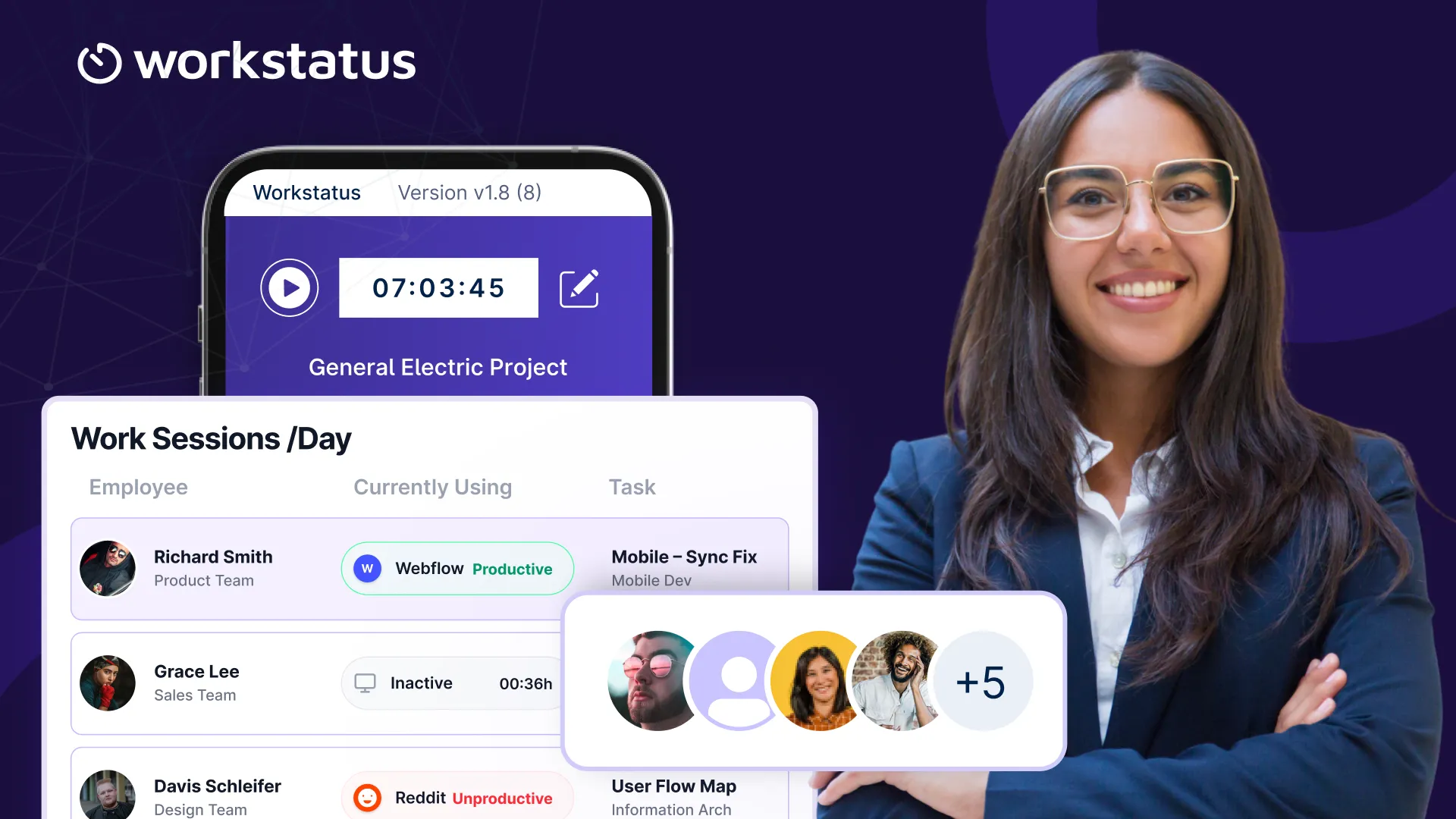
- Real-time employee activity and work monitoring
- Automated time tracking and attendance management
- Detailed productivity analytics and performance reports
- Project progress tracking and task management insights
- Workforce scheduling, shift planning, and team coordination
- Better visibility into remote, hybrid, and field teams
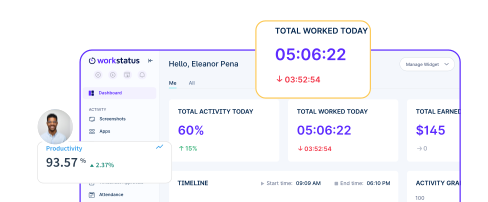
- Custom dashboards with real-time workforce performance tracking
By using Workstatus workforce intelligence tools, businesses can make faster decisions, improve operational efficiency, and build more productive and better-managed teams.
Business Results Driven by Workforce Intelligence
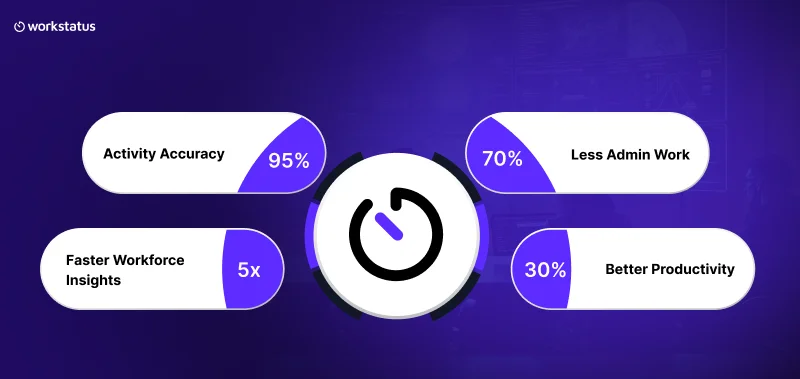
Workforce Intelligence helps organizations turn workforce data into measurable business outcomes.
By gaining real-time visibility into productivity, team utilization, and operations, businesses can improve efficiency, reduce manual effort, and make faster, data-driven decisions.
95% Activity Accuracy
Gain precise visibility into employee activity, work patterns, and operational performance.
70% Less Admin Work
Automate manual tracking, reporting, and workforce management processes.
5x Faster Workforce Insights
Access real-time analytics and actionable insights for quicker decision-making.
30% Better Productivity
Improve workforce efficiency through smarter monitoring, optimization, and performance tracking.
With Workforce Intelligence, businesses move beyond basic monitoring to build a more productive, efficient, and insight-driven workforce operation.
Best Practices for Building a Data-Driven Workforce Strategy
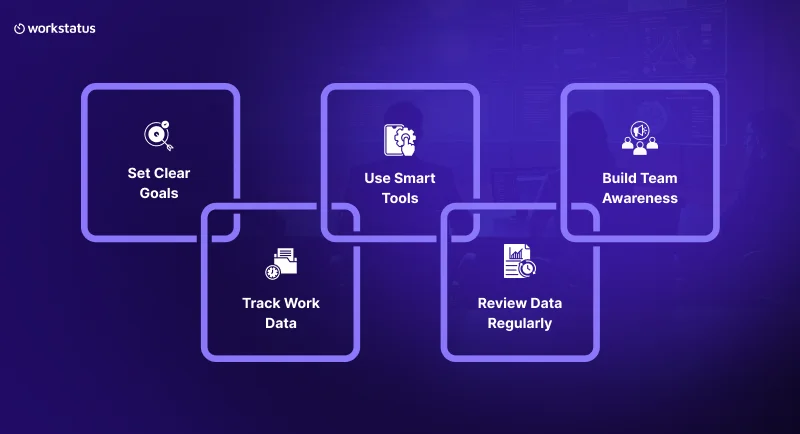
A data-driven workforce strategy helps businesses manage teams better and improve work performance.
Using workforce data helps companies make smarter and faster decisions. Best practices businesses should follow:
- Set clear goals for productivity and team performance
- Track attendance, work hours, and project progress regularly
- Use workforce tools to collect and manage work data easily
- Review workforce data often to find and fix work problems
- Help employees understand how workforce data is used
By following these best practices, businesses can improve productivity, manage teams more effectively, and make better business decisions.
Future Trends in Workforce Intelligence
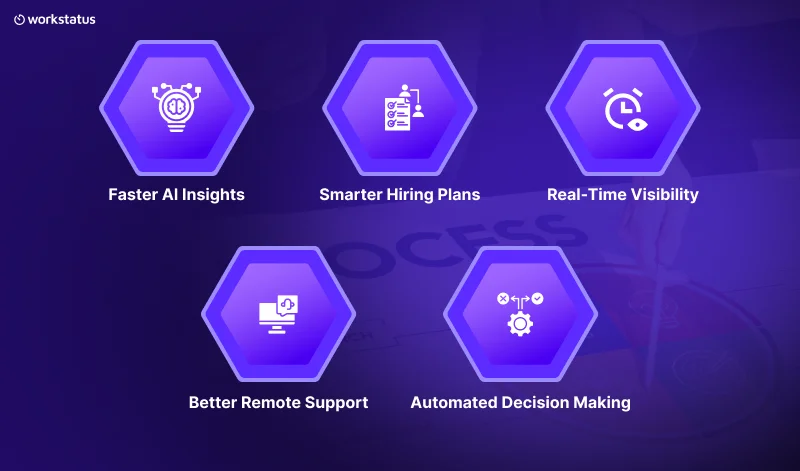
As businesses use more data and technology, workforce intelligence is helping companies work smarter and improve team performance.
New tools and technologies are making workforce management faster, easier, and more efficient.
Future trends in workforce intelligence:
- AI tools will help analyze workforce data faster
- Predictive data will improve hiring and workload planning
- Real-time tracking will improve productivity visibility
- Workforce tools will better support remote and hybrid teams
- Automated reports will help businesses make faster decisions
As workforce intelligence continues to grow, businesses will be able to improve efficiency, reduce work gaps, and achieve better results using data-driven insights.
Conclusion
Workforce intelligence helps businesses use work data to understand how employees and teams are performing. It helps companies improve productivity, plan work better, and make smarter business decisions.
With real-time workforce data and tools like Workstatus, businesses can manage teams more easily, improve work efficiency, and get better results.
As workplaces continue to change, workforce intelligence will help businesses build smarter, more productive, and more efficient teams.
FAQs
Q: What is workforce intelligence?
Workforce intelligence is the process of collecting and analyzing workforce data to improve productivity, planning, and business performance.
Q: Why is workforce intelligence important?
It helps businesses make smarter decisions using real workforce data instead of assumptions.
Q: What type of workforce data is collected?
Businesses collect data like attendance, work hours, productivity, project progress, and employee performance.
Q: How does workforce intelligence improve productivity?
It helps businesses identify work gaps, improve workflows, and manage workloads more efficiently.
Q: Can workforce intelligence help remote teams?
Yes. It helps businesses track productivity, monitor work progress, and improve collaboration for remote and hybrid teams.