
Table of Contents
Project overruns remain one of the biggest challenges for service businesses. A project may appear to be running smoothly for months before delivery starts slipping.
This is a common challenge faced by service businesses.
Projects begin with realistic budgets, planned timelines, and carefully allocated resources. Yet many still end up delayed, over budget, or less profitable than expected.
According to the Project Management Institute (PMI), 43% of projects exceed their original budgets.
When projects run over, the impact extends beyond missed deadlines.
- Teams face increased pressure
- Delivery quality can suffer
- Client relationships become strained
- Profit margins decline
The good news is that most project overruns do not happen suddenly. They develop through small operational issues that build over time.
By using productivity intelligence, organizations can identify these issues early, improve delivery predictability, and protect margins.
Why Project Overruns Continue to Happen
Most organizations already track project data, such as:
- Tasks completed
- Hours logged
- Project milestones
- Resource assignments
- Budget usage
But they still struggle to answer questions like
- What is delaying execution?
- Which teams have limited capacity?
- What risks could affect delivery next month?
- Are current work patterns helping project success?
Traditional project management tools show project status. They rarely explain why performance is improving or declining.
Common Causes of Project Overruns
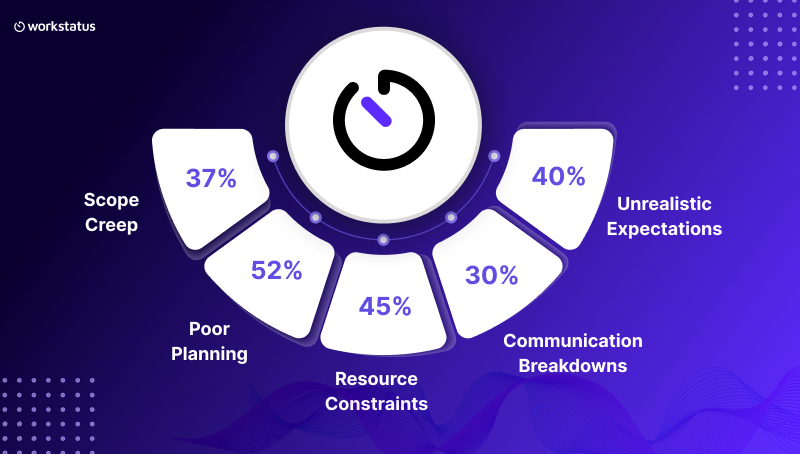
Some of the common causes of project overruns are as follows:
Scope Creep
- Project requirements keep changing.
- Extra work increases costs and delays.
Poor Project Planning
- Unrealistic timelines
- Inaccurate estimates
- Resources are not planned properly.
Resource Constraints
- Teams lack staff or the required skills.
- Uneven workloads create bottlenecks.
Communication Breakdowns
- Information is not shared clearly.
- Teams become misaligned.
- Rework and delays increase.
Unrealistic Expectations
- Deadlines are too aggressive.
- Heavy workloads reduce efficiency.
Lack of Operational Insight
- Productivity and capacity are unclear.
- Risks remain hidden until they grow.
Many of these issues contribute directly to project overruns and make delivery harder to manage.
The Visibility Gap Behind Project Overruns
Many projects look healthy at first.
- Teams stay busy
- Resources are fully assigned
- Work continues every day
But over time:
- Deadlines slip
- Costs rise
- Profitability declines
The reason is simple.
Activity does not always mean progress. Teams can spend many hours working while key milestones fall behind. Managers see status updates but often miss the following:
- Capacity issues
- Workload imbalances
- Delivery bottlenecks
As a result, problems are found too late.
Organizations need more than project data. They need visibility into how work affects delivery results. Without this visibility, project overruns become much harder to prevent.
What Is Productivity Intelligence™?
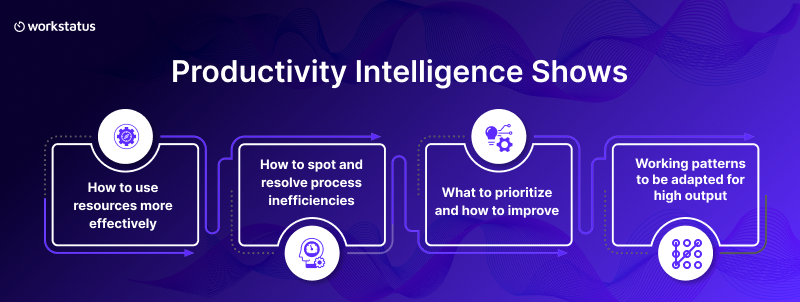
Productivity Intelligence™ helps organizations understand how work happens across teams and projects.
It combines information about:
- Productivity
- Work patterns
- Capacity
- Utilization
- Operational performance
This helps leaders answer questions such as:
- Where is productive time being lost?
- Which teams are overloaded?
- What is slowing delivery?
- Are resources being used effectively?
- Which projects show early signs of risk?
This visibility helps prevent project overruns before they happen.
Productivity intelligence for service businesses helps improve project outcomes, resource planning, and growth.
How Productivity Intelligence Helps Reduce Project Overruns
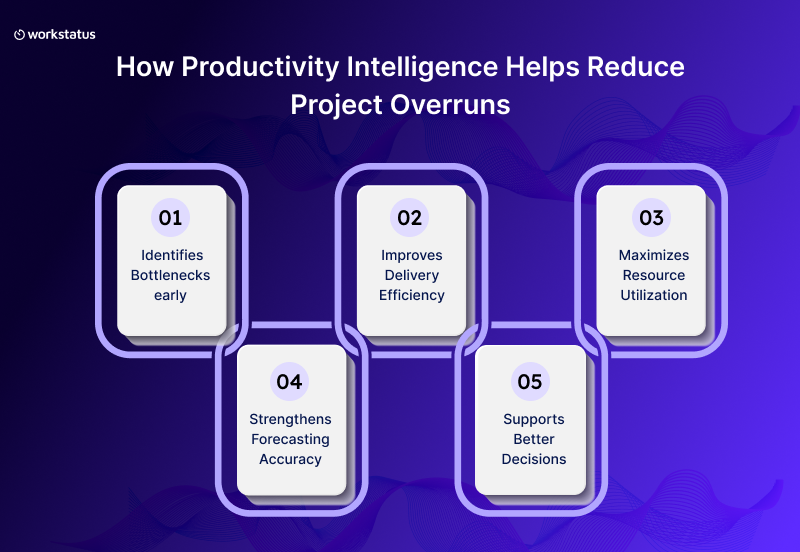
Better visibility into daily work helps organizations keep projects on track and within budget.
It also supports project productivity management by helping leaders understand how work patterns affect project outcomes.
Productivity intelligence for service businesses helps organizations reduce project overruns in the following ways:
1. Identifies Bottlenecks Early
Small issues often become major delays.
Examples include:
- Delayed approvals
- Resource dependencies
- Waiting for information
- Specialists supporting too many projects
Productivity intelligence helps identify these issues early. Managers can resolve problems before schedules are affected. Early intervention helps reduce project overruns and keeps delivery on track.
2. Improves Delivery Efficiency
Projects usually do not fail because teams lack effort. Productivity is often lost through:
- Frequent context switching
- Too many meetings
- Unplanned work
- Workflow interruptions
- Inefficient processes
Productivity intelligence highlights where time is being lost. Teams can remove obstacles and work more efficiently.
Benefits include:
- Faster delivery
- Better execution
- Stronger project delivery performance
Improving efficiency helps organizations reduce project overruns without increasing headcount.
3. Maximizes Resource Utilization
Project success depends on how resources are assigned. Problems occur when:
- Some employees are overloaded
- Others have unused capacity
Productivity intelligence helps leaders understand:
- Workload distribution
- Capacity levels
- Resource availability
This supports better planning and reduces project risks.
Resource utilization tracking helps balance capacity across teams and projects.
Balanced workloads play a major role in helping organizations reduce project overruns.
4. Strengthens Forecasting Accuracy
Looking only at completed work is not enough. Future performance depends on current work patterns.
Productivity intelligence provides visibility into:
- Productivity trends
- Capacity levels
- Project progress
- Emerging risks
This helps organizations:
- Forecast more accurately
- Adjust plans sooner
- Avoid schedule and budget issues
Many businesses also use capacity planning software to improve forecasting and resource planning. Better forecasting reduces uncertainty and lowers the likelihood of project overruns.
5. Supports Better Decisions
Late decisions often lead to overruns.
Without clear visibility, risks are discovered too late.
Productivity intelligence helps managers:
- Reallocate resources early
- Balance workloads
- Prioritize important work
- Address risks sooner
- Improve project planning
Combined with workforce productivity analytics, leaders gain a clearer understanding of delivery performance and can make decisions with greater confidence.
How Productivity Intelligence Protects Project Margins
Project overruns affect more than timelines. They also affect profitability.
Common reasons include:
- More effort than planned
- Unplanned work
- Expanding project scope
- Inefficient use of billable time
Productivity intelligence helps leaders identify issues early.
They can see:
- Where effort exceeds estimates
- Which projects consume extra time
- How work patterns affect profitability
- Where delivery costs are increasing
- Which projects need corrective action
This helps protect margins before losses grow.
The earlier organizations identify risks, the easier it becomes to reduce project overruns and protect profitability.
Moving From Project Tracking to Project Intelligence
Most organizations do not need more data.
They need better visibility into what the data means.
Modern productivity tracking software helps turn operational data into useful insights.
Project tracking shows activity. Productivity intelligence explains performance.
It helps leaders understand:
- How work is happening
- What is slowing delivery
- Which projects are at risk
- What affects productivity
- What actions can improve results
This shift helps organizations prevent project overruns instead of reacting to them.
The Business Impact of Productivity Intelligence
Organizations that use productivity intelligence often achieve:
- Fewer project overruns
- Earlier risk detection
- Better forecasting
- More predictable delivery
- Higher client satisfaction
- Improved efficiency
- Greater project profitability
For IT services firms, these improvements support growth and scalability.
Organizations that use a workforce intelligence platform can identify risks earlier, optimize resources, and improve delivery consistency.
Workstatus: Productivity Intelligence for Smarter Teams
Workstatus delivers Productivity Intelligence™ through its broader work intelligence platform and Work Intelligence™ approach.
It helps organizations understand how productivity, capacity, and operational performance affect project delivery.
With workforce intelligence software, organizations can:
- Monitor productivity trends
- Identify bottlenecks early
- Understand team capacity
- Improve resource allocation
- Track project performance in real time
- Improve planning and forecasting
- Reduce project overruns
Instead of reacting to problems, leaders gain the visibility needed to prevent them.
Final Thoughts
Project overruns rarely happen overnight. They are often caused by hidden inefficiencies, capacity constraints, workflow bottlenecks, and delayed decision-making.
The challenge is not a lack of project data but a lack of understanding of what that data is revealing.
Productivity intelligence helps organizations:
- Uncover factors affecting delivery performance
- Improve operational efficiency
- Identify risks early
- Protect project margins
For service businesses, the ability to reduce project overruns is no longer just a project management goal. It is a competitive advantage that improves delivery predictability, client satisfaction, and profitability.
By combining project productivity management with a workforce intelligence platform, organizations can improve decision-making and achieve stronger delivery outcomes.
Frequently Asked Questions
1. What is productivity intelligence?
Productivity intelligence helps organizations understand how work happens across teams and projects.
It analyzes:
- Work patterns
- Productivity trends
- Task activity
- Team collaboration
- Capacity data
This information is converted into actionable insights that help improve planning, productivity, and project outcomes.
2. How does productivity intelligence help reduce project overruns?
Productivity intelligence helps organizations reduce project overruns by:
- Identifying bottlenecks early
- Detecting risks sooner
- Reducing rework and delays
- Supporting faster decisions
- Improving resource utilization
- Increasing delivery predictability
- Protecting project margins
3. Why do projects go over budget or miss deadlines?
Project overruns often result from:
- Poor planning and estimation
- Scope creep
- Resource constraints
- Communication gaps
- Unexpected changes or risks
4. What are the most common causes of project overruns?
Several factors can gradually push projects off track:
- Scope changes
- Unrealistic timelines
- Poor resource allocation
- Lack of project visibility
- Delayed decision-making
5. How can organizations identify project overrun risks early?
Organizations can identify project overrun risks early by:
- Monitoring productivity trends
- Tracking resource capacity
- Identifying bottlenecks early
- Reviewing project health regularly
6. How does productivity intelligence improve project visibility?
Productivity intelligence improves project visibility by:
- Revealing productivity patterns
- Highlighting bottlenecks
- Showing team capacity and workload trends
7. Can productivity intelligence predict project delays?
Yes, it helps uncover warning signs before delays occur.
It can:
- Detect productivity declines
- Identify workload imbalances
- Highlight delivery bottlenecks
8. How does productivity intelligence help teams stay on schedule?
It helps teams address issues before they affect delivery.
Key benefits include:
- Identifying risks early
- Improving resource allocation
- Reducing workflow inefficiencies
- Supporting proactive decisions
9. How do service businesses use productivity intelligence to protect margins?
It helps organizations control costs and improve delivery efficiency.
Benefits include:
- Detecting cost overruns early
- Optimizing resource utilization
- Reducing unplanned work
- Improving project profitability
- Preventing margin erosion from delays and overruns