
Table of Contents
For many service organizations, delivery margins are under constant pressure. Projects become more complex. Client expectations increase. Teams work across multiple locations.
Yet leaders are still expected to deliver projects on time, control costs, and maintain profitability.
The challenge is that margins usually decline due to several small issues and not a single major issue. It happens through dozens of small operational inefficiencies:
- Underutilized employees
- Hidden workload disparities
- Poor resource allocation
- Scope expansion without visibility
- Capacity planning mistakes
Most organizations already have access to workforce data. The problem is that they struggle to turn that data into actionable insights.
This is why many businesses are investing in AI workforce intelligence today. It helps to gain better visibility into how workforce decisions affect utilization and profitability before it is too late to take appropriate action.
Why Margins Erode in Service Businesses
When businesses grow, managing workforce efficiency becomes more difficult. Leaders struggle to answer questions such as
- Which projects are losing profitability?
- Where are billable hours being lost?
- Which teams are reaching capacity limits?
- What factors are affecting delivery?
Most companies already track:
- Timesheets
- Utilization
- Project progress
- Employee activity
The challenge is connecting the available information to business outcomes when there is a lack of visibility, margin loss often goes unnoticed.
Why Traditional Workforce Reporting Isn’t Enough
Traditional workforce reporting is not sufficient for modern service firms. Such reporting is typically focused on past performance. Although it helps businesses to know what happened in the past, it doesn’t provide any explanation for why it happened or what to do next.
For instance, a utilization report may show lower billable utilization. However, it does not explain:
- Whether resources were assigned correctly
- Which projects used more effort than expected
- Where productivity losses occurred
- How workforce decisions affected profitability
As a result, businesses often respond after margins have already been impacted.
What Is AI Workforce Intelligence?
AI workforce intelligence helps businesses understand how work affects performance.
Using AI workforce analytics, it connects:
- Workforce data
- Project data
- Productivity trends
- Operational metrics
This helps uncover patterns that may otherwise be missed.
You gain visibility into:
- Workforce utilization
- Team capacity
- Productivity patterns
- Resource effectiveness
- Delivery risks
- Operational performance
Thus, AI workforce intelligence plays a significant role in turning workforce data into useful business insights.
How AI Workforce Intelligence Improves Delivery Margins
AI workforce intelligence improves delivery margins by transforming raw data into actionable and predictive insights
Improves Resource Utilization
AI analyzes real-time project pipelines, employee skill sets, and capacity, and recommends the best-fit resources instantly. This reduces bench time and emergency contractor costs, which heavily protect the margin. Resource utilization directly affects profitability.
With better visibility, you can identify:
- Underutilized employees
- Overloaded teams
- Available billable capacity
- Resource allocation gaps
This helps organizations use talent more effectively and improve workforce efficiency.
Identifies Delivery Risks Early
In logistics and operations, AI continually calculates variables like weather and traffic to dynamically optimize routes. This reduces idle time, lowers fuel costs, and prevents costly delivery exceptions.
Projects rarely fail without warning. Early signs often include:
- Falling productivity
- Increasing workloads
- Missed milestones
- Resource shortages
AI workforce intelligence helps you spot these issues early and take action before costs and timelines are affected.
Strengthens Capacity Planning
AI Workforce Intelligence transforms capacity planning from a static annual exercise into a continuous, data-driven strategy
Resource management software helps assign people to projects. However, workforce planning requires more visibility. You also need to understand:
- Future project demand
- Workforce availability
- Upcoming capacity constraints
It helps in making better staffing decisions.
Reduces Revenue Leakage
Revenue leakage often comes from:
- Untracked work
- Missed billable hours
- Scope changes
- Resource inefficiencies
Workforce intelligence provides better visibility into how work is performed. This supports stronger project margin management and improves project profitability.
Enables Faster Decisions
The longer a problem goes unnoticed, the greater will be its financial impact.
A modern operational intelligence platform gives you visibility into:
- Workforce performance
- Delivery health
- Project execution
This helps organizations respond faster and protect delivery margins.
Traditional Workforce Reporting vs Workforce Intelligence
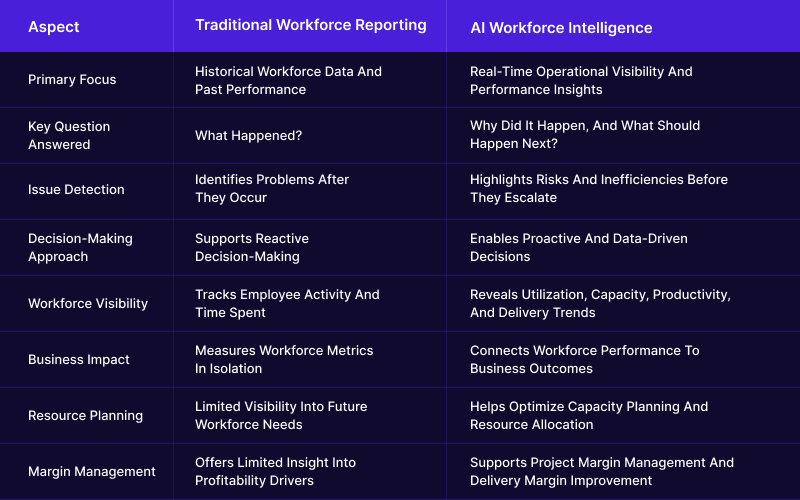
Traditional reporting helps organizations understand the past. AI workforce intelligence helps them improve future performance.
Workstatus: Turning Insights Into Stronger Delivery Margins
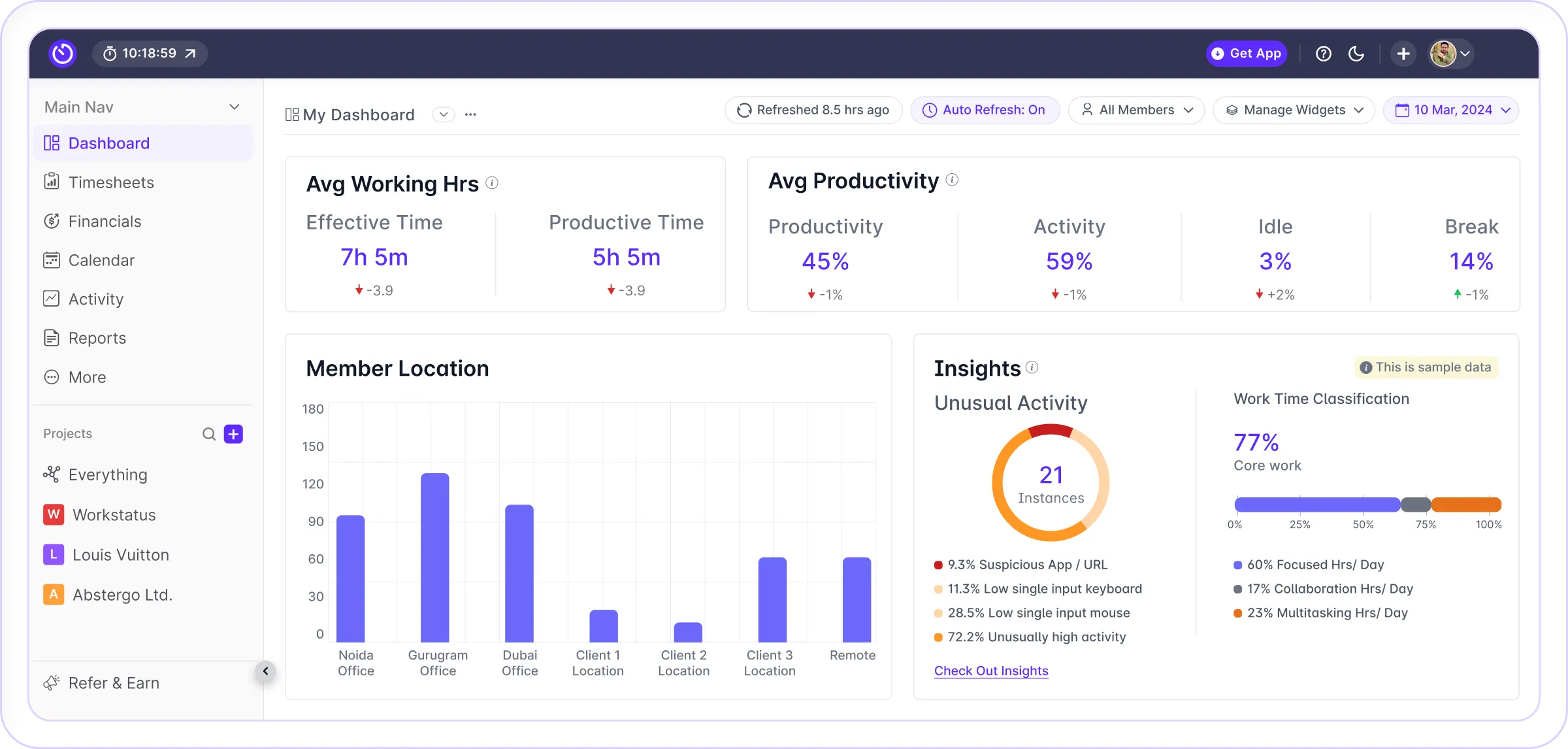
Turning workforce data into action requires more than dashboards and reports. Organizations need visibility into:
- Workforce activity
- Productivity
- Capacity
- Utilization
- Project performance
Built on Workforce Intelligence™, Workstatus gives you a clear view of how work is performed across teams, helping them improve delivery performance and protect margins.
With Workstatus, you can:
- Improve resource utilization by identifying underused team members
- Detect delivery risks early before they impact timelines
- Track productivity trends to spot performance bottlenecks.
- Monitor team capacity in real time for smarter workload planning.
- Connect workforce activity to project outcomes.
- Reduce operational inefficiencies.
- Support profitable growth with actionable workforce insights.
By combining workforce data, productivity metrics, and project intelligence in one platform, Workstatus helps you make faster decisions and drive sustainable business growth.
Conclusion
Protecting margins is no longer only a finance responsibility. Organizations need visibility into:
- How work is performed
- How resources are utilized
- Where inefficiencies affect profitability
This is where AI workforce intelligence adds value.
By combining AI workforce analytics with operational visibility, service organizations can:
- Improve resource utilization
- Increase project profitability
- Strengthen project margin management
- Make faster decisions
- Reduce costly operational issues
As service businesses grow, AI workforce intelligence is becoming an important tool for improving efficiency, profitability, and delivery performance.
FAQs
1. What is AI workforce intelligence, and how does it improve delivery margins?
AI workforce intelligence helps you understand how work is being done across teams and projects. It provides visibility into utilization, productivity, capacity, and delivery performance. This helps improve efficiency and protect delivery margins.
2. How can AI workforce intelligence help reduce project cost overruns?
It helps identify issues early, such as:
- Workload imbalances
- Missed deadlines
- Resource shortages
- Unplanned effort
It helps teams to take corrective action before costs increase. Such timely action helps in reducing cost overruns.
3. Can AI workforce intelligence identify unprofitable projects before they affect margins?
Yes. AI workforce intelligence helps identify unprofitable projects before they significantly impact margins by analyzing workforce, project, and financial data in real time.
4. What is the difference between workforce analytics and AI workforce intelligence?
Workforce analytics focuses on reporting workforce data and metrics.
AI workforce intelligence goes further by connecting workforce data with business outcomes. It helps leaders identify trends, risks, and opportunities for improvement.
5. How does AI workforce intelligence improve resource utilization?
AI workforce intelligence improves resource utilization by helping organizations balance workloads, optimize capacity, and assign resources more effectively across projects.
6. Does AI workforce intelligence help improve on-time project delivery?
Yes. AI workforce intelligence can significantly improve on-time project delivery by identifying risks, bottlenecks, and resource constraints before they cause delays.
7. How does AI workforce intelligence compare to traditional project tracking tools?
Traditional Project Tracking Tools
Traditional tools primarily focus on:
- Task management
- Project timelines
- Milestone tracking
- Status updates
They help teams understand project progress but often rely on manual reviews to identify risks, workload issues, and productivity challenges.
AI Workforce Intelligence
AI workforce intelligence combines project data with workforce and operational insights to provide a more complete view of project performance.
It helps organizations:
- Monitor workforce utilization
- Identify delivery risks early
- Detect productivity bottlenecks
- Improve workload distribution
- Increase project profitability
These metrics help you understand how workforce performance affects profitability.
8. Can AI workforce intelligence predict project delays before they happen?
AI workforce intelligence can identify early warning signs, including:
- Overloaded teams
- Missed milestones
- Falling productivity
- Resource constraints
It helps you to take the right action before project schedules are affected.
9. Can AI workforce intelligence reduce employee burnout while improving profitability?
Yes. AI workforce intelligence helps identify overloaded employees, workload imbalances, and capacity issues. This enables managers to redistribute work, reduce the risk of burnout, and maintain productivity and profitability.
10. Which metrics should businesses track to measure the impact of AI workforce intelligence?
Key metrics include billable utilization, resource utilization, project profitability, delivery margins, employee productivity, capacity utilization, and on-time project delivery.