
Table of Contents
Time is one of the most crucial resources for service businesses. Every hour spent on client work affects revenue, project costs, and profitability.
Yet many businesses still struggle with inaccurate timesheets, missed billable hours, and limited visibility into how teams are spending their time.
According to a 2022 Tribes.AI survey
- Lost Billable Hours Cost Businesses US$64k Per Employee.
- 90.5% reported that billable hours are being missed, with businesses estimating that 21.5% of billable time goes unrecorded on average.
- The findings also suggest that nearly one in five billable hours may never be captured.
This is why more service businesses are now investing in employee time tracking systems.
Employee time tracking for service businesses helps
- Track work accurately
- Improve project planning
- Make better decisions.
In this guide, we’ll explore why time tracking matters for service businesses, its benefits, common challenges, best practices, and how Workstatus helps service businesses make the most of their time.
What Is Employee Time Tracking for Service Businesses?
Employee time tracking is the process of monitoring and documenting the time employees spend on projects, tasks, and client work.
There are various methods for employee time tracking, such as paper timesheets, punch cards, and digital time-tracking tools.
For service businesses, time tracking is not just a tool to record daily attendance. It plays a critical role in ensuring productivity, compliance with labor laws, and effective payroll management.
Modern employee time tracking software makes it easier to document work hours, manage projects, and generate reports without relying on manual timesheets.
It can help businesses:
- Track employee work hours
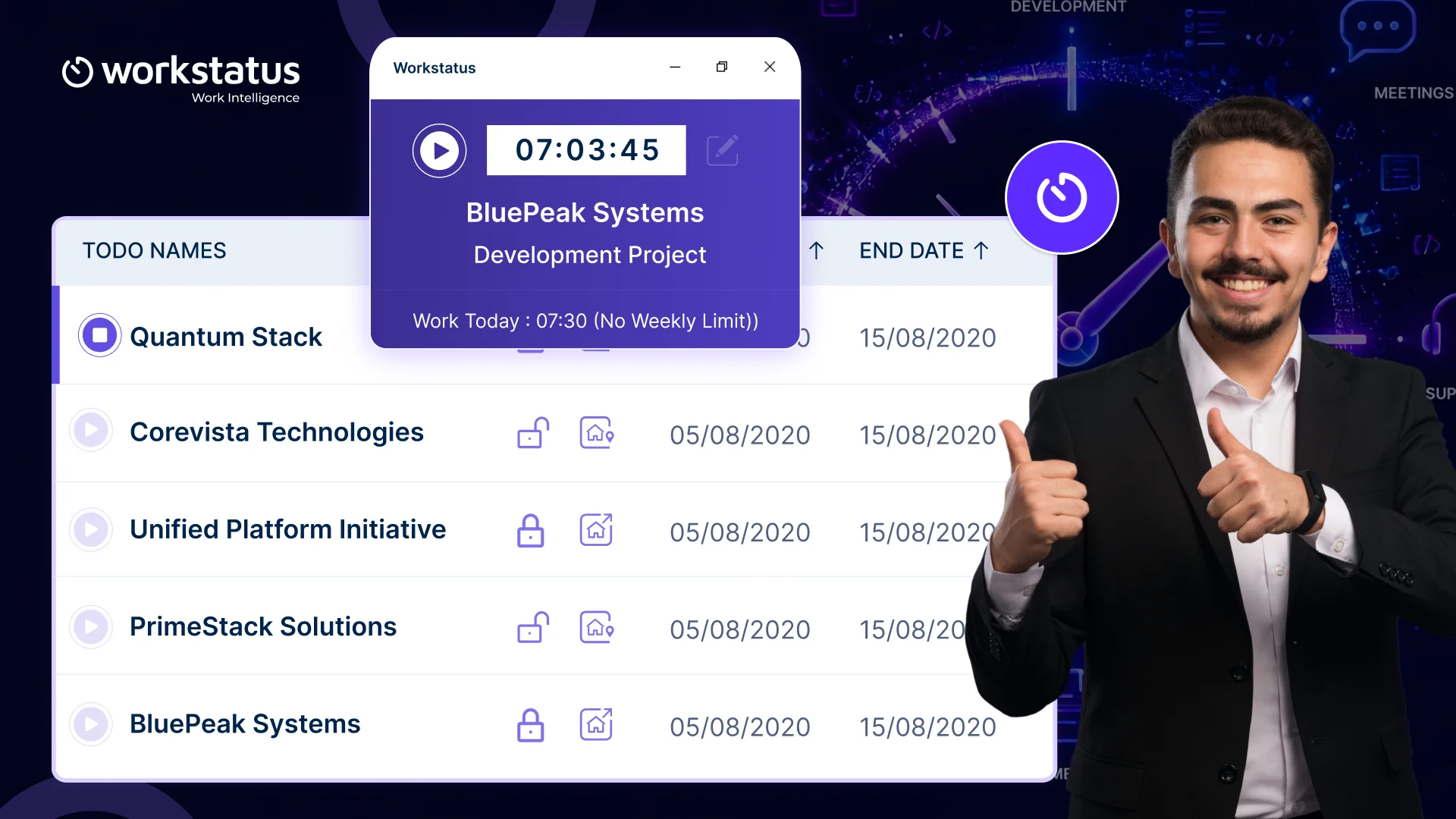
- Record project time
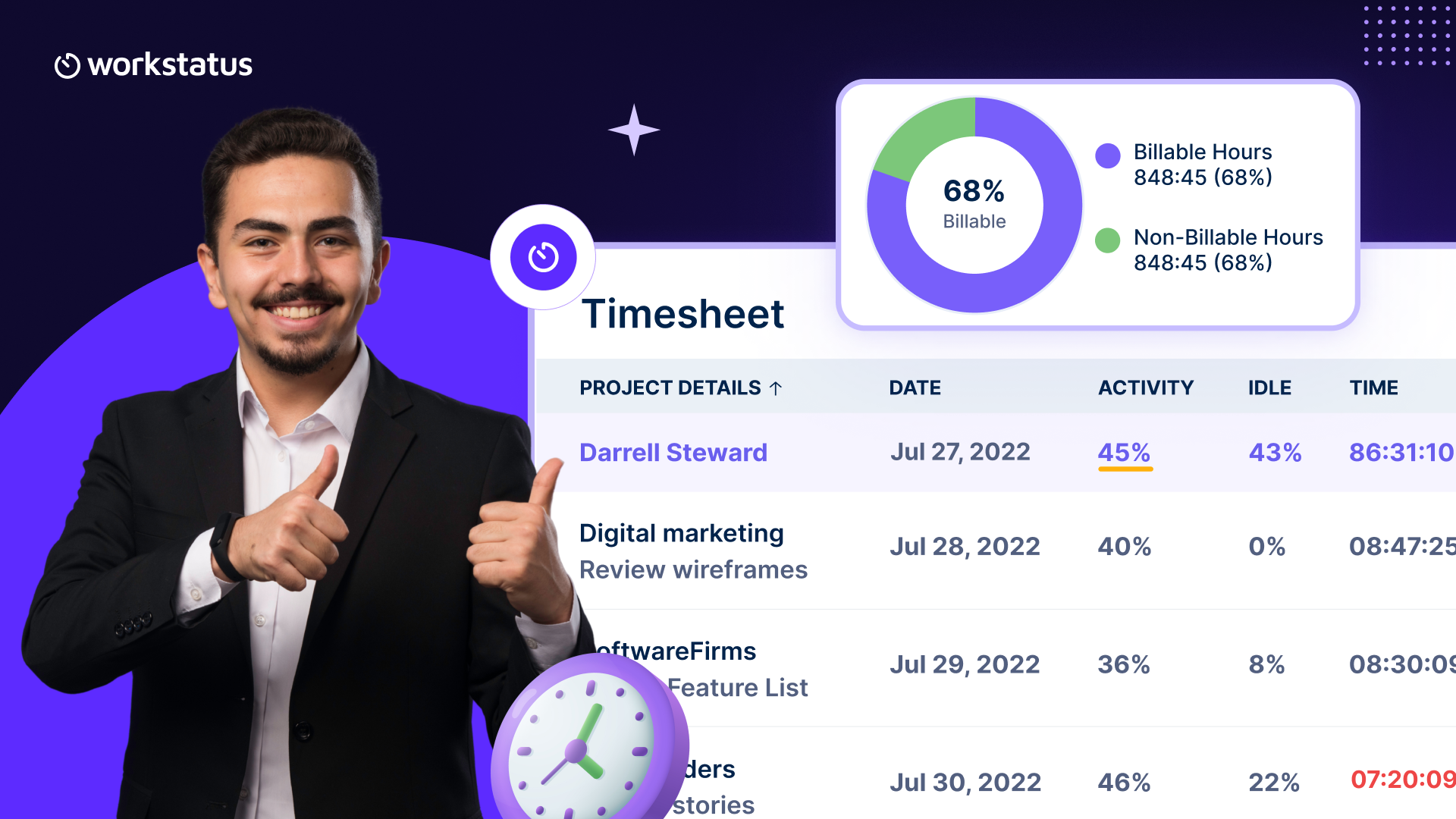
- Capture billable and non-billable work
- Manage timesheets
- Measure team utilization
- Improve project planning
Why Time Tracking Matters for Service Businesses
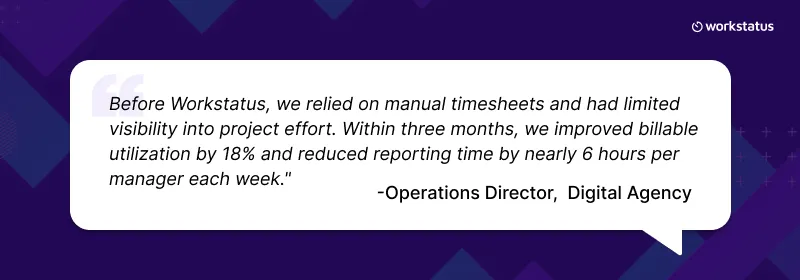
Service businesses sell time and expertise. If work hours are not tracked properly, it becomes difficult to understand project costs and team performance.
Accurate project time tracking helps businesses answer important questions:
- Are projects staying within budget?
- Are employees spending time on the right work?
- Are billable hours being captured?
- Are workloads balanced across teams?
Time tracking software for employees also supports better employee time management by helping employees stay focused and organized.
For growing businesses, strong service firm time-tracking strategies help in improving efficiency, profitability, and client satisfaction.
Benefits of Employee Time Tracking Software
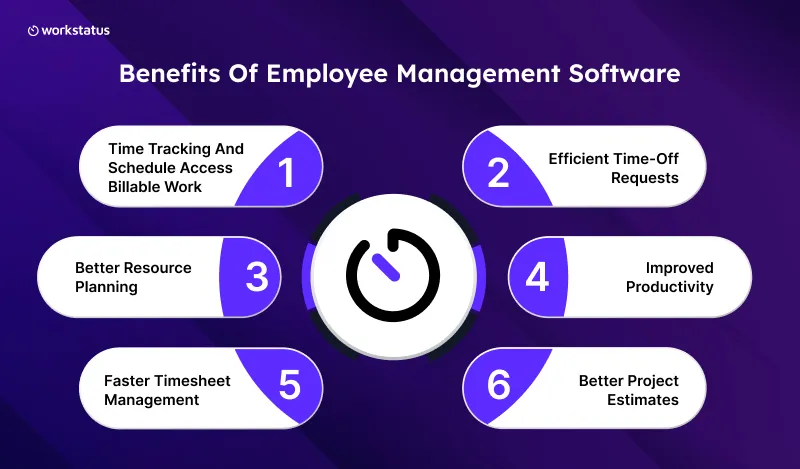
Effective time tracking helps businesses manage projects, teams, and costs more effectively. Here are some of the benefits of using employee time tracking software:
Better Control Over Billable Work
Track billable work accurately to improve revenue capture and client billing.
- Capture all client work accurately
- Reduce missed billable hours
- Improve invoice accuracy
Better Resource Planning
Understand team capacity and workloads to allocate resources more effectively.
- See how employee time is spent
- Balance workloads more effectively
- Avoid overloading team members
Improved Productivity
Identify inefficiencies and help teams focus on high-value work.
- Identify time-consuming tasks
- Aid employee burnout detection
- Improve team efficiency
Faster Timesheet Management
Automate time tracking processes to reduce administrative effort.
- Reduce manual data entry
- Simplify approvals
- Save administrative time
Better Project Estimates
Use actual time data to create more accurate project plans and budgets.
- Use past project data for planning
- Create more realistic timelines
- Improve budget accuracy
How Employee Time Tracking Improves Profitability
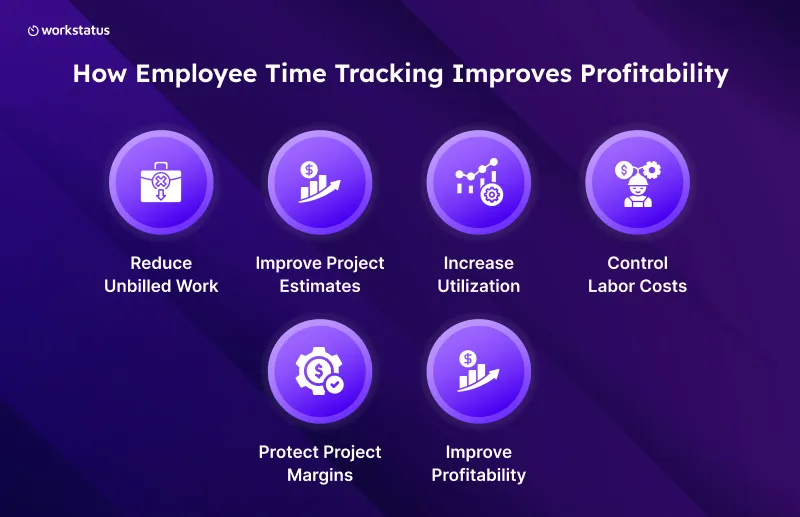
Employee time tracking not only boosts productivity but also improves profitability. According to QuickBooks research, businesses that use time tracking increased billable time on invoices by 11% and reduced payroll costs by 6% on average.
By capturing exact hours spent on client projects and internal operations, businesses can reap the following benefits:
- Reduce unbilled work – Track all work hours accurately so billable time is not missed.
- Improve project estimates – Use actual time data to plan future projects more accurately.
- Increase utilization – Help employees spend more time on billable and productive work.
- Control labor costs – Monitor time spent on tasks to avoid unnecessary labor expenses.
- Protect project margins – Identify time overruns early before they reduce profitability.
- Improve profitability – Increase revenue and reduce wasted time to improve business performance.
Common Time Tracking Challenges in Service Businesses
Time tracking challenges not only cause operational inconvenience but also affect revenue, team morale, and long-term growth. Here are some common time tracking challenges faced by service businesses:
Employees Forget to Log Time
Missed time entries lead to inaccurate records and lost billable hours.
- Missing timesheets
- Inaccurate records
- Lost work hours
Billable Hours Go Untracked
Untracked client work can result in lost revenue.
- Client work gets missed
- Revenue is lost
Limited Project Visibility
Poor visibility makes it harder to identify project issues early.
- Difficult to track project progress
- Issues discovered too late
Too Much Administrative Work
Manual processes increase the time spent managing timesheets.
- Manual timesheet reviews
- Time-consuming approvals
Uneven Workloads
Lack of visibility can lead to an imbalance in team workloads.
- Some employees are overloaded
- Others have unused capacity
Employee Burnout
Excessive workloads may go unnoticed and affect performance.
- Long hours go unnoticed
- Productivity may decline
Lack of Useful Insights
Time data is less valuable when it is not used to guide decisions.
- Time data is collected
- Little action is taken on it
Solving these time tracking challenges helps service businesses improve efficiency, protect revenue, and manage teams more effectively.
How Workstatus Supports Employee Time Tracking for Service Businesses
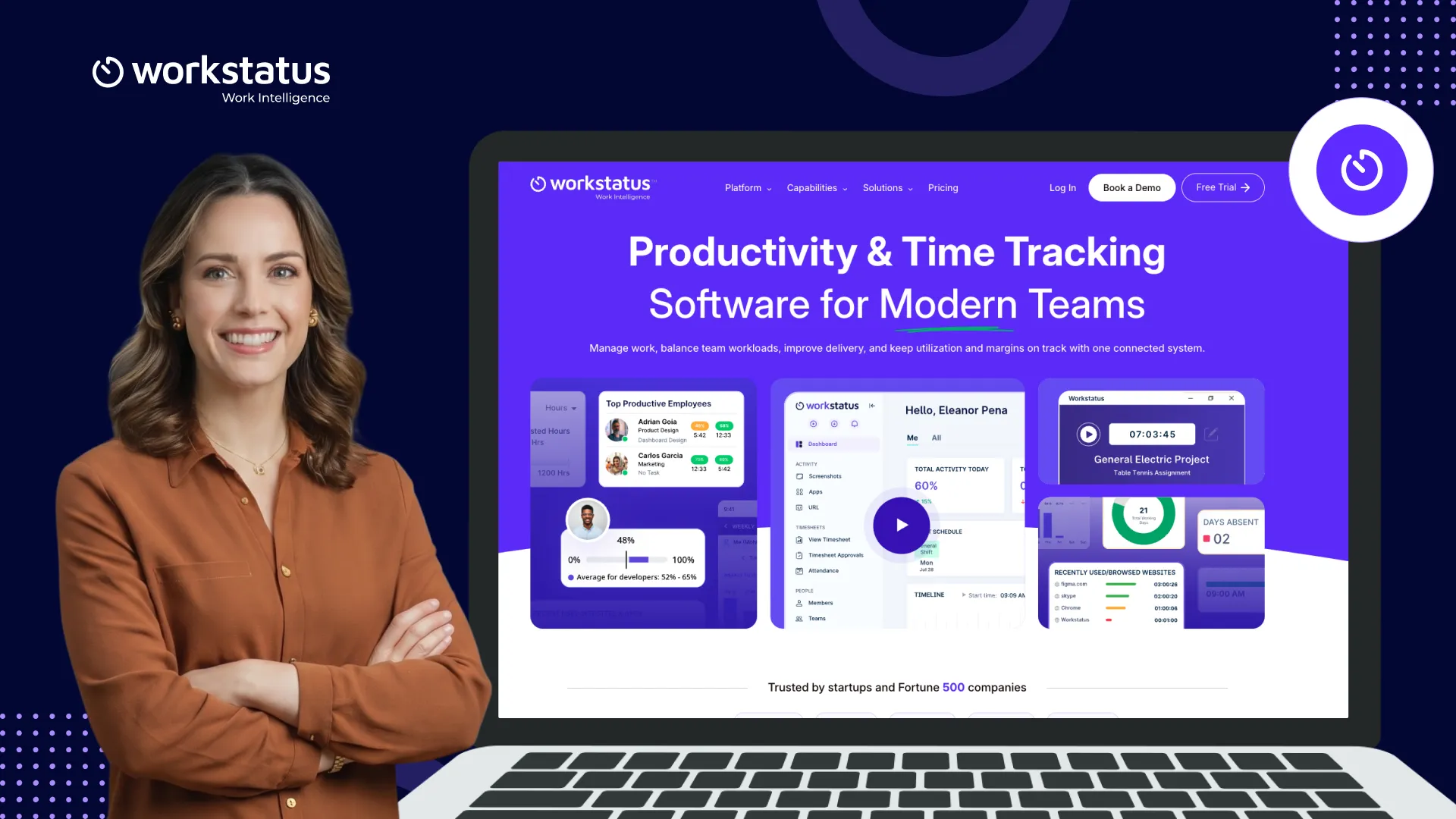
Workstatus is designed to provide complete visibility into attendance, effective working hours, and team productivity. It supports accurate time tracking for service businesses in many ways
- It automatically captures employee work hours, reduces manual timesheets, and improves accuracy.
- Time tracking with screenshots allows employers to monitor tasks, analyze performance, and optimize workflows in real-time.
- It tracks attendance in real time, helping maintain accurate records of employee work hours.
- Helps managers plan shifts and allocate resources based on workload and availability.
- Provides real-time location visibility for field and remote teams during work hours.
- Streamlines time-off requests and tracks employee availability in one place.
- Converts approved timesheets into payroll data and billable hours for accurate invoicing.
This helps service businesses improve productivity, simplify workforce management, and protect profitability.
5 Best Practices For Employee Time Tracking
Time tracking can cause discomfort for employees. However, when conducted fairly and transparently, it is beneficial for both employees and organizations. Here are the best practices for recording and monitoring the amount of time spent on tasks or projects.
1. Keep Time Tracking Simple
Use a simple process so employees can track time quickly and accurately.
2. Track Time Against Projects
Record time against specific projects and tasks to see where work is going.
3. Track Billable and Non-Billable Work
Track both billable and non-billable hours to understand how time is used.
4. Review Reports Regularly
Review time reports regularly to identify issues before they affect projects.
5. Be Transparent
Clearly explain the purpose of time tracking to encourage team participation.
When used correctly, employee time tracking helps teams stay productive, improves project visibility, and supports better business decisions.
Future Trends in Employee Time Tracking Software
Businesses now want more than basic time tracking.
Key trends include:
- AI-Powered Automation & Predictive Analytics
AI systems analyze historical patterns to automatically categorize activities, suggest task assignments, and predict project timelines before delays occur.
- Privacy-First, Non-Intrusive Monitoring
The shift is replacing the practice of continuous screenshot monitoring. It is secure, background-based activity tracking that helps in maintaining employee privacy while measuring actual output.
- Automated Labor Compliance
Employee productivity tracking Software is being integrated with built-in compliance checks for mandatory breaks, overtime pay rates, and maximum work hours.
- Employee Well-being & Burnout Prevention
Tracking apps now integrate wellness metrics, such as identifying if employees are consistently overworking or missing breaks.
- Advanced Mobile & Biometric Integration
Mobile-first solutions use geofencing for remote or field workers, while secure biometric systems (facial and iris recognition) are deployed at physical facilities to prevent time theft.
Conclusion
Effective employee time tracking for service businesses does more than record attendance.
It helps businesses:
- Billable hours tracking
- Improve employee time management
- Implement time intelligence and work intelligence
- Increase utilization
- Improve project visibility
- Protect project margins
The right employee time tracking software gives businesses the insights they need to improve productivity, profitability, and project delivery.
FAQS
What is employee time tracking?
Employee time tracking is the process of recording and managing the hours each employee works.
Why is employee time tracking important for service firms?
Employee time tracking is beneficial for service firms in manifold ways
- It shows where employee time is being spent.
- It improves billing accuracy.
- It helps manage workloads better.
- It supports better project planning.
How does employee time tracking improve project profitability?
- It tracks billable hours accurately.
- It helps reduce unbilled work.
- It identifies projects that are over budget.
- It improves resource utilization.
What should service firms track besides work hours?
- Billable and non-billable time.
- Project progress.
- Employee utilization.
- Attendance and leave.
- Task completion.
How do you track employee time without micromanaging?
- Use automatic time tracking tools like Workstatus
- Focus on project outcomes, not constant monitoring.
- Share time data openly with teams.
- Use insights to support employees, not control them.
How does time tracking help reduce margin leakage?
Time tracking using a reliable online timesheet software helps in reducing margin leakage in the following ways:
- Capturing all billable work.
- Highlighting time overruns early.
- Improving invoicing accuracy.
- Helps control project costs.
What is the best employee time tracking software for service businesses?
Choosing the best time tracking software depends on your business needs.
- Look for automatic time tracking and utilization reporting.
- Choose software with project and workforce insights.
Workstatus offers time tracking, productivity, project, and workforce intelligence in a single platform.