
Table of Contents
Your project started with a clear scope, timeline, and budget. Then came a few extra requests, additional revisions, and last-minute stakeholder inputs.
Individually, they seemed manageable. Together, they added more hours, stretched resources, and increased costs without increasing project revenue.
That’s how scope creep often unfolds. It rarely starts with a major change. Instead, it grows gradually until deadlines slip, workloads expand, and project margins begin to shrink.
The financial impact can be significant.
According to research from the Project Management Institute (PMI), organizations waste 5.1% of every project dollar spent due to poor requirements management, a common contributor to scope-related issues, rework, and project overruns.
Whether you’re managing client projects, software development initiatives, or internal business programs, understanding how scope creep affects profitability is essential.
In this guide, you’ll learn what scope creep is, what causes it, how to recognize it before it escalates, and the practical steps teams can take to control costs, protect project margins, and keep work on track.
What Is Scope Creep in Project Management?
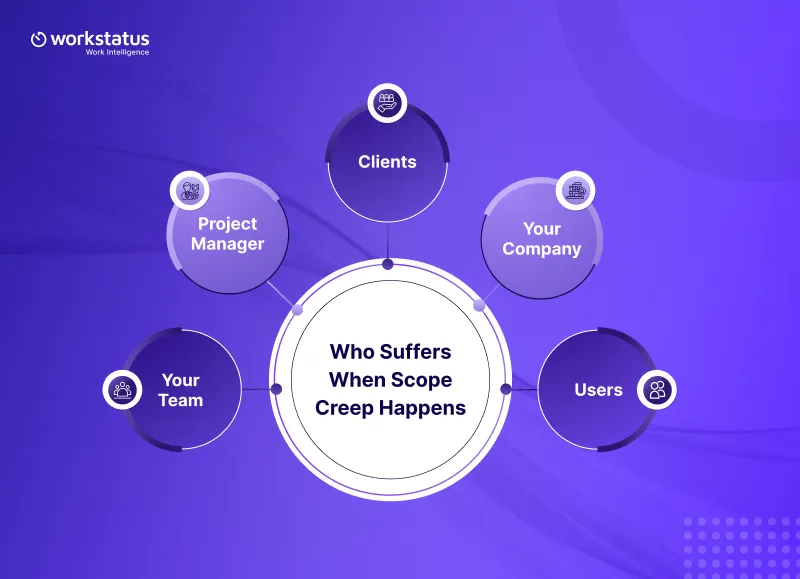
Scope creep in project management refers to the unplanned changes to a project’s scope that do not align with changes to the budget, schedule, or available resources.
In simple words, it means adding unapproved requirements to a project over its life.
These unplanned changes may include
- Extra features
- Additional revisions
- New integrations
- More reports
- Extra deliverables
These requests may seem trivial at first. Over time, they increase project costs and workload.
However, keep in mind that not every change is scope creep.
A planned scope change is reviewed, approved, and documented. Project scope creep happens when work is added without following a formal process.
Modern project management software helps teams track scope changes and protect project margins.
5 Common Causes of Scope Creep
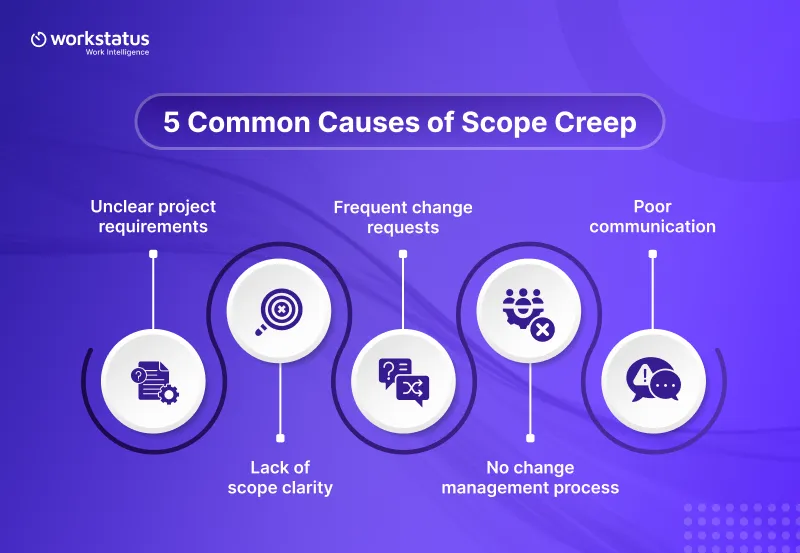
Scope creep can usually arise from multiple issues. Here are some common causes that frequently lead to project derailment:
1. Unclear Project Requirements
When requirements are not clearly defined, teams and clients may have different expectations.
This often leads to additional requests later.
2. Lack of clarity and depth in the scope specification document
Without clear documentation, project boundaries become difficult to manage.
New requests are more likely to be added.
3. Frequent Change Requests
Clients often ask for new features or revisions after work begins.
If customers keep trying to get extra work “on the cheap,” such requests can quickly expand the project scope.
4. No Change Management Process
Some teams approve requests without reviewing:
- Cost impact
- Timeline impact
- Resource needs
This is a common reason for project scope creep.
5. Poor Communication
Miscommunication can create confusion about what is included in the project.
This often leads to extra work.
The Hidden Cost of Scope Creep on Project Margins
Scope creep often acts as a silent profit killer in agencies. It often arrives as a dramatic demand for free work.
It can come as simple requests, such as “Could you just…” requests; additional revision rounds; and features that were “obviously implied” in the original brief.
These requests may appear small at first. But together they can destroy your margins.
Scope creep affects more than deadlines. It affects profits too.
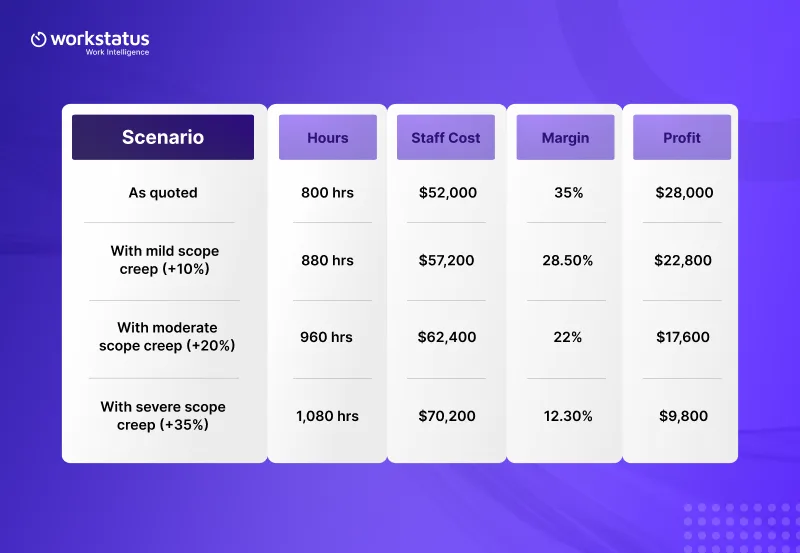
Let’s take the example of a typical agency project: A software development project quoted at $80,000 with an estimated 800 hours of work.
The target gross margin is 35% ($28,000 profit after staff costs). Here is how scope creep typically affects the profit margins
A moderate level of scope creep reduces profit from $28,000 to $17,600, a 37% drop. A severe scope creep makes profit fall to $9,800, reducing profitability by nearly two-thirds.
When this happens across multiple projects throughout the year, it has a cumulative negative impact on agency revenue and growth.
Consequently, the team ends up spending more resources than planned.
The budget stays the same.
As a result:
- Costs increase
- Margins shrink
- Teams become overloaded
- Other projects may be delayed
For service businesses, consulting firms, and IT services, project scope creep can quickly reduce project profitability.
Understanding Scope Creep Through Real Examples
Reviewing real project scope creep examples can help teams identify problems early.
Software Development Project
A client requests a customer portal. After development begins, they ask for additional features:
- Advanced reporting
- Additional user roles
- More features
Then the project becomes much larger than planned.
Website Development Project
The original scope includes:
- 10 pages
- Basic contact forms
Later, the client requests:
- Additional pages
- CRM integration
- More design revisions
The workload increases significantly.
Consulting Project
A consulting project starts with strategic recommendations.
Later, the client requests:
- Additional workshops
- More reports
- Ongoing support
The team spends more time than expected without increasing the budget.
How to Detect Scope Creep in Its Early Stages
The sooner you spot scope creep, the easier it is to control.
Early signs to detect scope creep are
- Project hours are higher than planned
- New tasks keep getting added
- Teams are working beyond estimates
- Clients request frequent changes
- Budgets are being used faster than expected
- Team workloads continue growing
- Deadlines start slipping
Regular utilization tracking and time tracking can help identify these issues early.
Identifying these signs at an early stage makes managing scope creep in project management much easier.
How Workstatus Helps Prevent Scope Creep
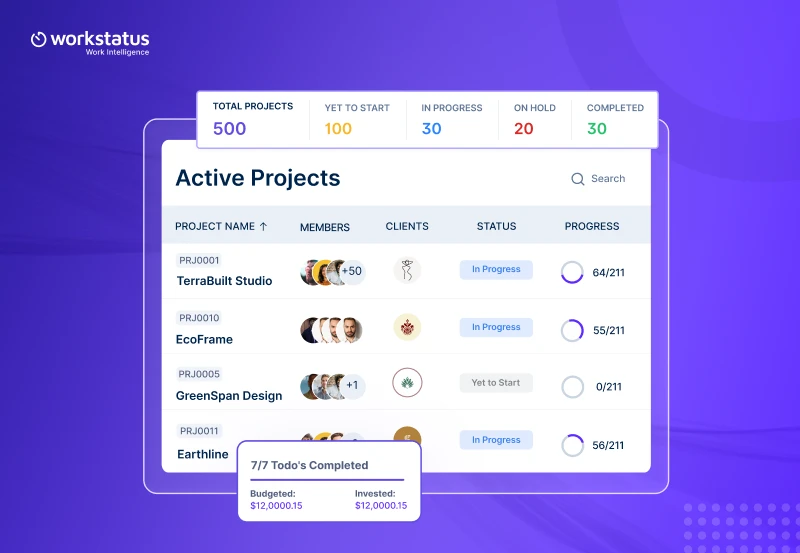
Workstatus provides clear visibility into project hours, budgets, workloads, and productivity.
So, managers can quickly see when projects are consuming more hours or resources than planned to avoid scope creep before it impacts profitability.
With Workstatus, teams can
- Use Project Intelligence to check project health and resource consumption
- Detect scope changes before they become costly overruns
- Get Time Intelligence to compare planned vs. actual hours
- View project progress with Gantt Charts and identify delays early
- Manage workloads to prevent resource over-allocation
- Identify additional work requests before they impact delivery
- Gain visibility into project budgets, timelines, and team effort
- Check productivity trends and ensure project hours are spent on high-value work
Thus, Workstatus helps service businesses maintain project control, protect margins, and deliver projects with greater predictability.
Strengthen Your Scope Management Process
Scope creep is a common challenge for service businesses, consulting firms, and IT service providers.
If left unchecked, it can lead to:
- Budget overruns
- Delayed projects
- Higher costs
- Overloaded teams
- Lower profits
The good news is that it can be managed.
Strong project scope management starts with:
- Clear requirements
- Proper documentation
- Regular project reviews
- Better workload management
- Accurate time tracking
Knowing how to manage and handle scope creep can help teams avoid unnecessary costs and protect project margins.
The earlier teams identify scope changes, the easier it is to manage project scope creep.
FAQs
What is scope creep in project management?
Scope creep in project management happens when new work is added to a project after it starts without updating the budget, timeline, or resources.
What are some common project scope creep examples?
Some common project scope creep examples are as follows:
- Adding new features during development
- Requesting extra revisions
- Expanding project requirements
- Adding new integrations
- Increasing deliverables without increasing the budget
How do you prevent scope creep in client projects?
Some of the effective ways to prevent scope creep are as follows:
- Set clear project requirements
- Create a detailed scope document
- Review all change requests
- Track project progress regularly
- Communicate expectations early
The best way to prevent scope creep is to utilize an integrated workforce management tool.
How do you manage scope creep once it starts?
Managing scope creep in project management starts with identifying the additional work and understanding its impact on the budget, timeline, and resources.
What are the key steps for managing project scope creep?
Managing project scope creep usually involves:
- Reviewing new requests
- Assessing costs and timelines
- Updating project plans
- Improving resource allocation
- Tracking project progress
A structured project scope creep management process helps keep projects under control.
Why is project scope management important?
Project scope management helps teams stay focused on approved work. It is valuable for many reasons
- Prevent scope creep and unexpected work.
- Keep projects on time and within budget.
- Help teams stay focused on agreed goals.
- Protects project profitability and margins.
How can project management software help with scope creep?
Project management software helps teams track project progress, workloads, budgets, and resources. It also supports utilization tracking, billable hours tracking, and project intelligence.
How does Workstatus help with project scope creep management?
Workstatus helps with project scope creep management by providing time tracking, workload management, resource allocation, utilization tracking, and project intelligence.