
Table of Contents
You must have heard that many service teams already track time, but still, they struggle to understand their real performance.
This is a very common challenge that comes up when teams start growing.
Time tracking is in place, timesheets are filled, invoices are created, and reports are generated, even after all this, some questions remain.
- Why are margins not increasing?
- Why does the utilization keep fluctuating and changing?
- Why does the project go over budget without any warning?
The problem is simple; it’s just the lack of clarity. In fact, professional service firms lose nearly 15–25% of billable hours due to poor time tracking visibility.
Time tracking only shows you the total hours you have worked, but it does not explain the depth of how it impacts the team capacity, profitability, and the performance of projects.
With the service teams growing, just tracking the hours is not enough, as the teams need better visibility into how the work is done and how it affects the business’s needs.
This is where time intelligence helps, it makes you understand not only the hours worked but the impact which was created during those hours.
In this blog, we’ll look forward to what is better: time tracking or time intelligence, and which suits the growing service firms well.
Let’s go!!
What is Time Tracking?
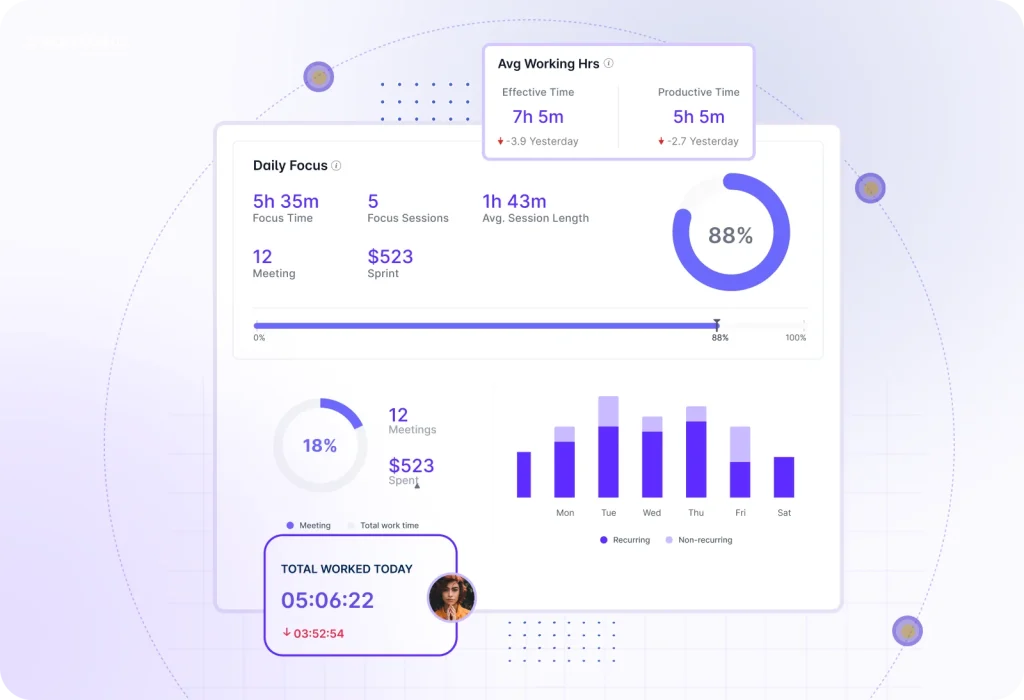
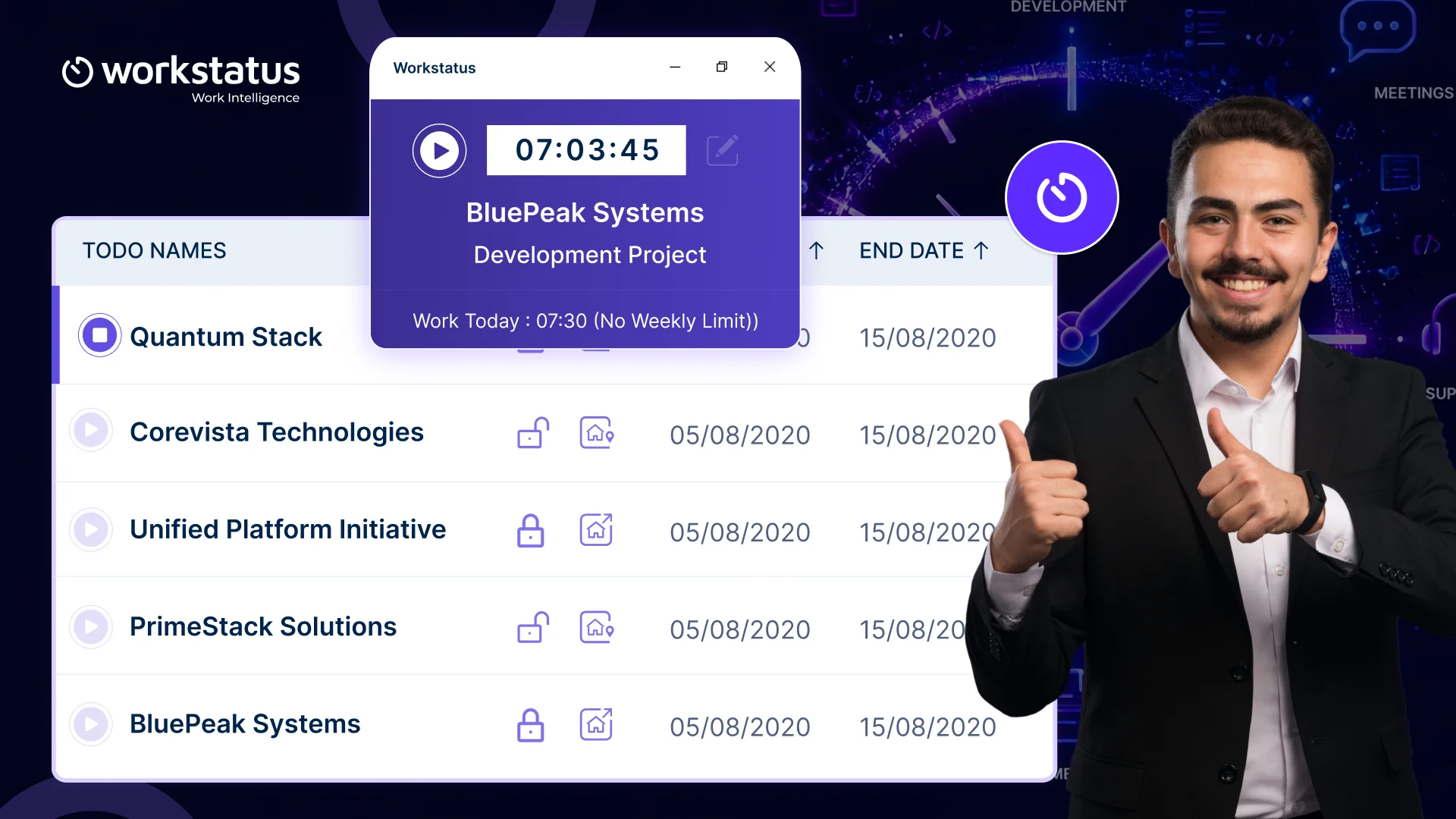
Time tracking is basically recording how much time is spent on different tasks and projects. It helps you see how your time is being spent in your business.
- Tracks time spent on client work and internal tasks
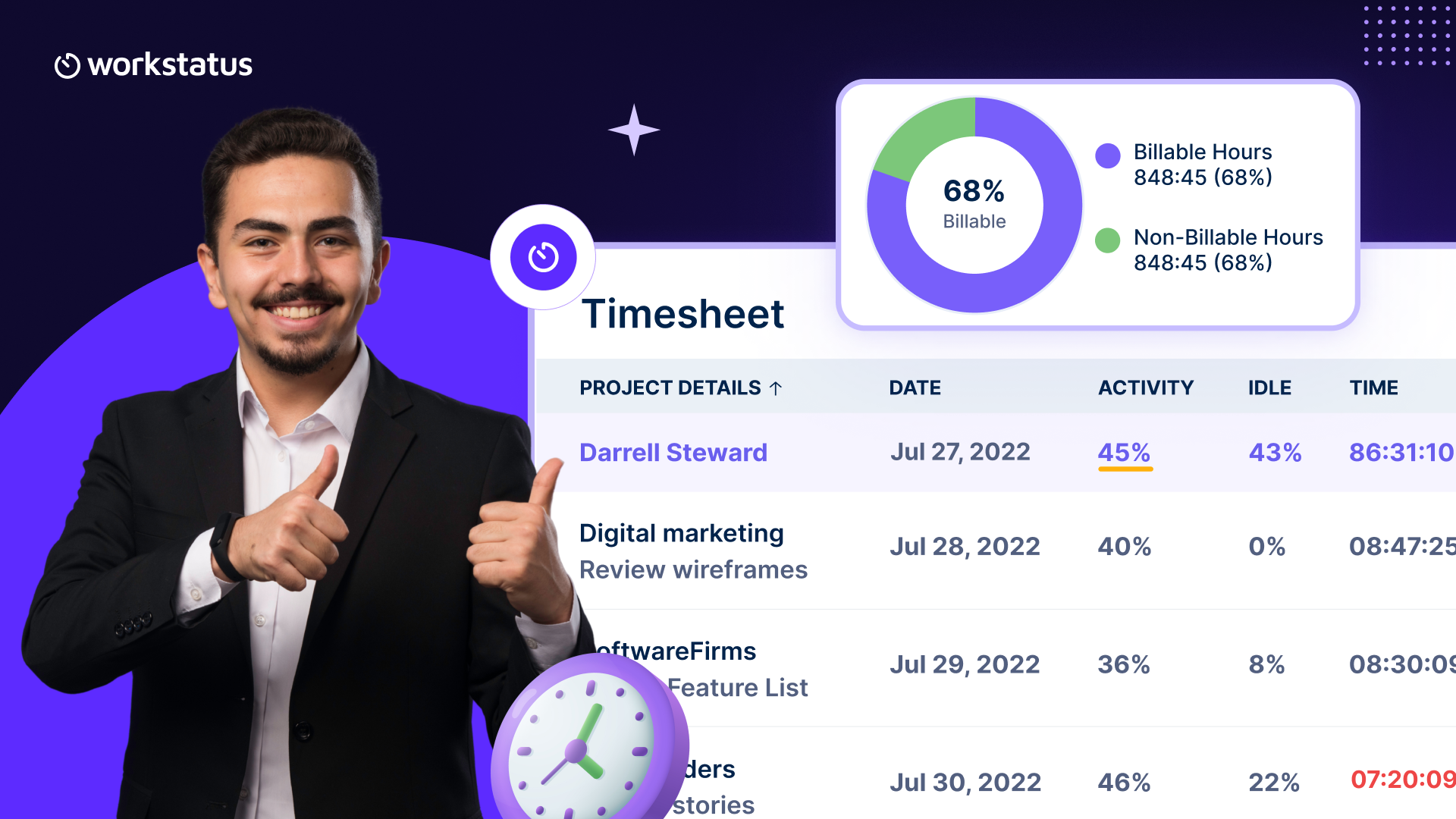
- Shows billable and non-billable hours
- Supports reporting and billing
- Helps plan budgets and projects
Time tracking helps you see how much time is spent. But it does not always show how that time affects your results.
What is Time Intelligence?
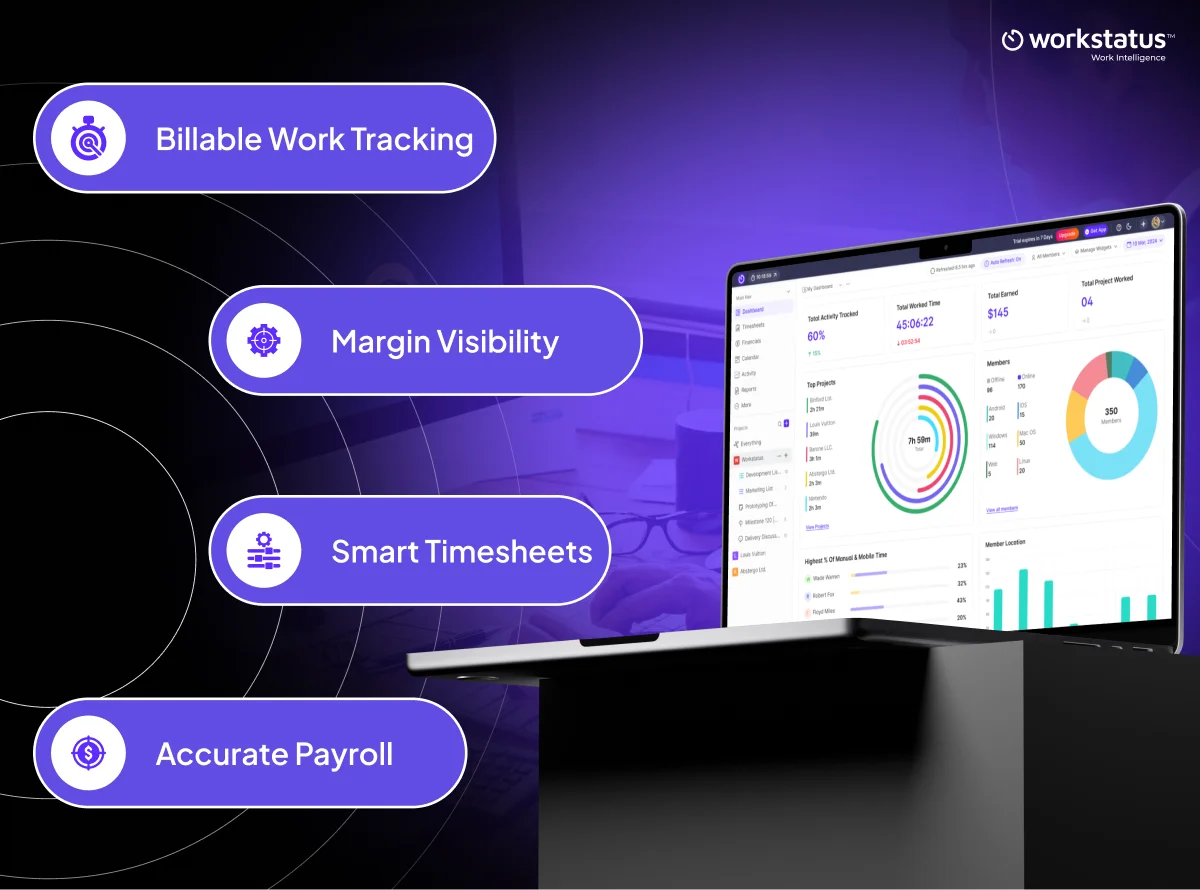
Time tracking shows you the hours, but what about the business impact? That’s where time intelligence comes in.
It helps growing service firms understand how time affects delivery, profitability, productivity, and operational efficiency.
- Tracks billable vs non-billable work clearly
- Connects time data to project margins
- Simplifies online timesheets and approvals
- Improves invoicing and payroll accuracy
In short, the time intelligence platform goes beyond tracking hours. It helps service businesses understand what those hours actually mean for operations, delivery, and growth.
Time Intelligence vs Time Tracking: Key Differences
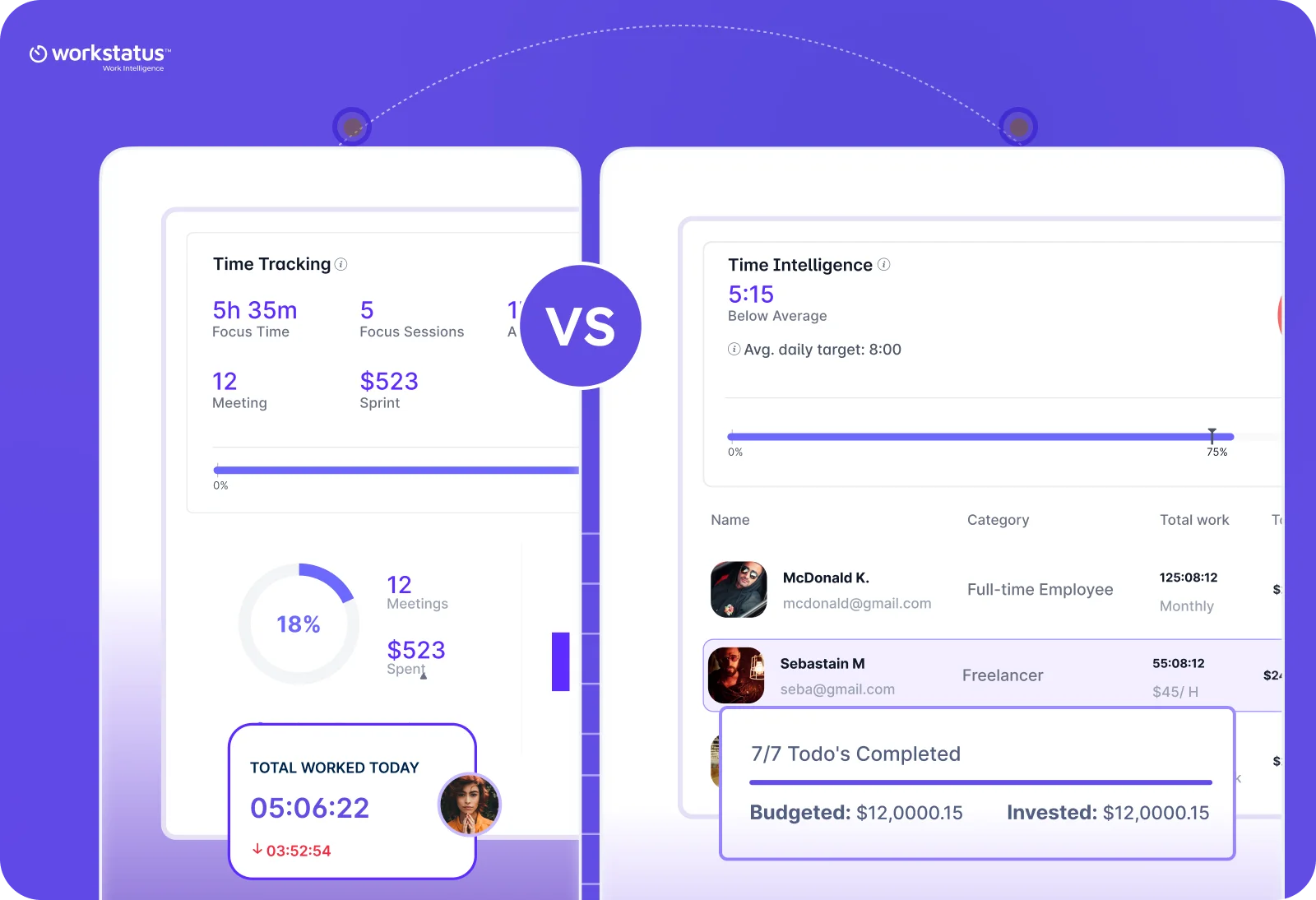
At first, time intelligence and time tracking may seem similar, as both deal with time. But they serve very different purposes as your business grows.
Let’s see what the key differences between time intelligence and time tracking are:
1. Core Objective
Time Tracking: Records how many hours are worked
Time Intelligence: Helps improve margins and overall performance
2. What It Focuses On
Time Tracking: Tracks time entries and timesheets
Time Intelligence: Connects time with margins, utilization, and project outcomes
3. Level of Visibility
Time Tracking: Shows how much time was spent
Time Intelligence: Shows how well that time was used
4. Business Decisions It Supports
Time Tracking: Helps with billing and payroll
Time Intelligence: Helps with planning, forecasting, and growth
5. Risk Detection
Time Tracking: Shows problems after they happen
Time Intelligence: Gives early warnings for delays and margin risks
6. Overall Business Impact
Time Tracking: Answers, “Where did the time go?”
Time Intelligence: Answers, “Is our time helping us grow profitably?”
Time tracking records hours.
But Time Intelligence is a modern alternative to time tracking, which transforms those hours into smarter decisions, stronger margins, and scalable operational growth.
Why Growing Service Firms Are Moving Beyond Tracking
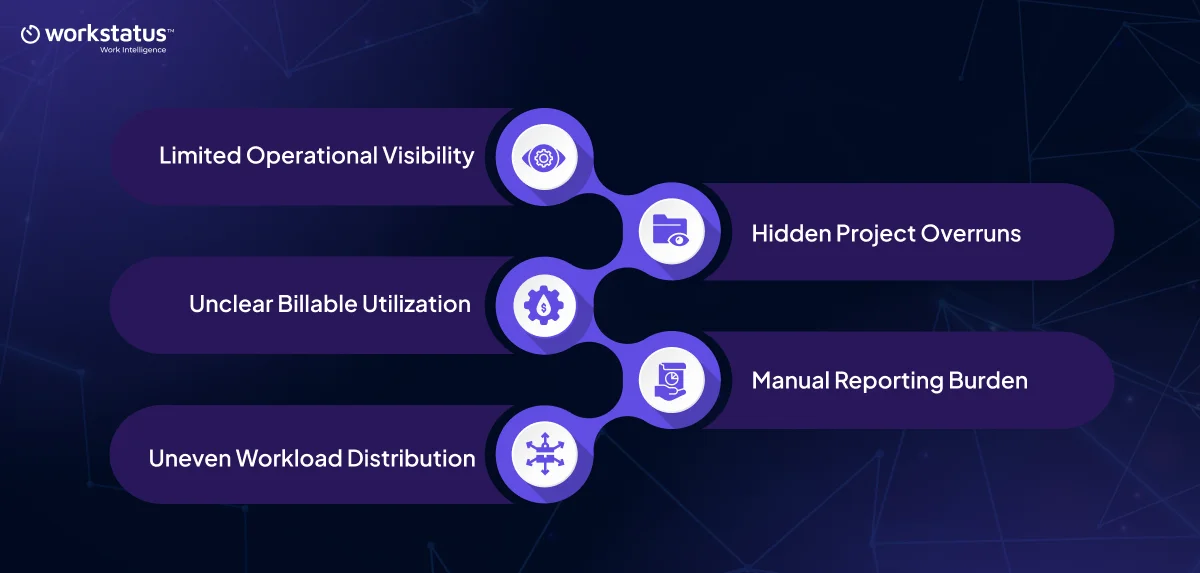
As service firms scale, simply recording hours is no longer enough. Leaders need deeper visibility into utilization, margins, and delivery risks, not just timesheets.
- Teams track hours, but managers still lack operational clarity.
- Delivery delays and overruns are identified too late.
- No clear understanding of billable vs non-billable work.
- Teams spend excessive time managing timesheets and reports.
- Workloads and team capacity remain difficult to balance
Growing firms need more than tracking; they need intelligence. Moving beyond timesheets helps them protect profitability, improve planning, and scale with confidence.
👉 See your actual utilization insights. Calculate Now.
Why Workstatus is the Best Time Intelligence Software for Service Businesses
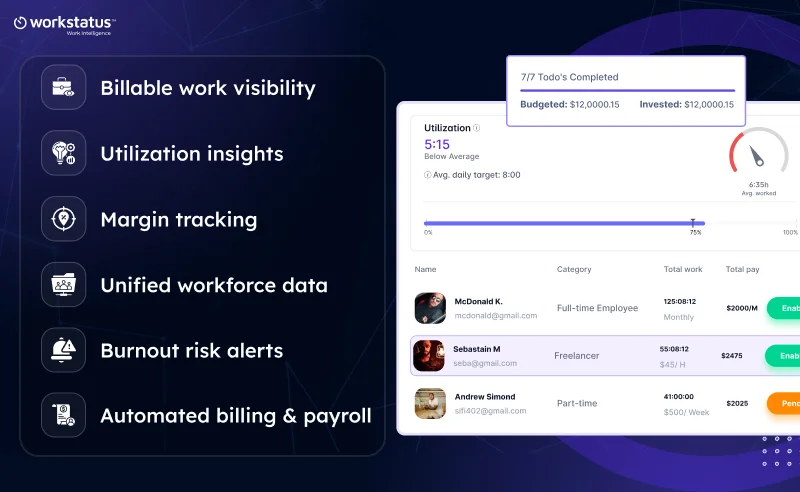
Service businesses where time drives revenue need more than basic tracking.
They need real-time visibility into utilization, profitability, workload distribution, and delivery performance.
That’s where Workstatus makes the difference:
- Clear billable vs non-billable visibility across projects
- Real-time utilization and team capacity insights
- Direct connection between time, margins, and profitability
- Unified timesheets, payroll, invoicing, and reporting
- Early workload imbalance detection to reduce burnout
- Automated timesheets with accurate billing and payroll
Workstatus doesn’t just track hours; it helps service businesses understand how work impacts revenue, efficiency, and sustainable growth, and gives them intelligent time tracking altogether.
How to Choose the Right Time Intelligence Software for Your Firm
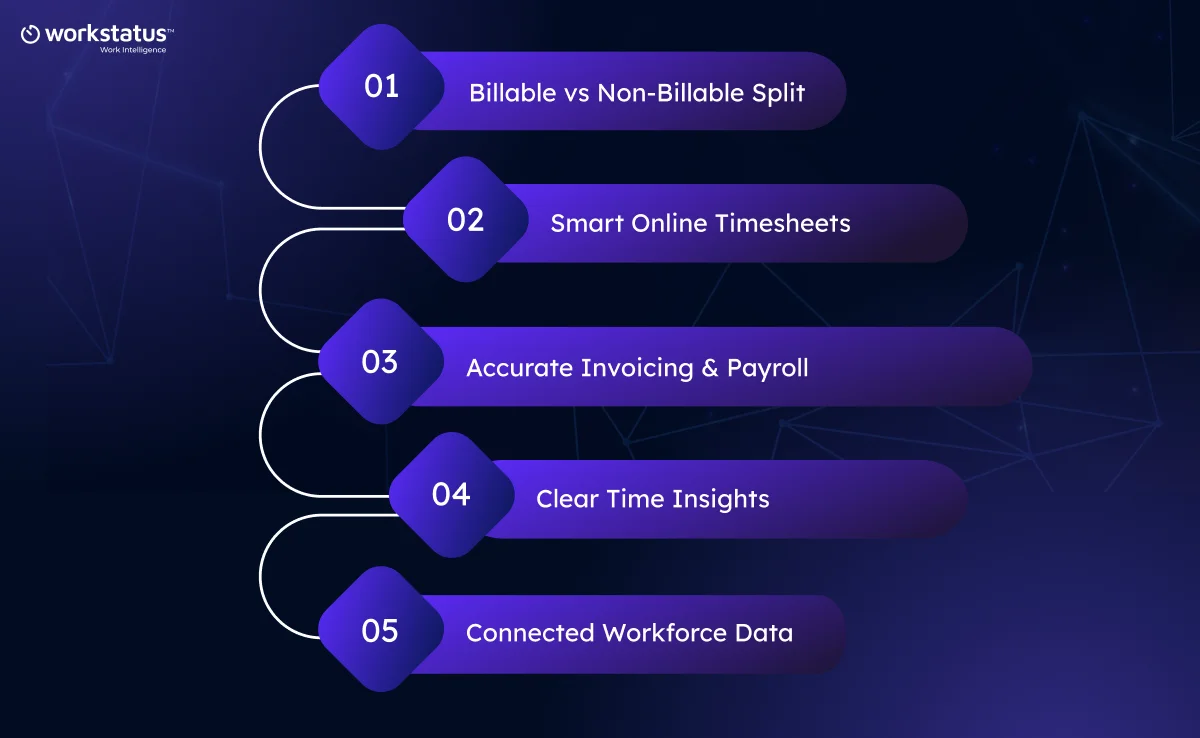
Not all time tools are built for growing service businesses.
The right solution should do more than collect hours; it should help you improve utilization, protect margins, and make better decisions.
Here’s what to look for:
- Billable vs non-billable time visibility
- Smart online timesheets and approvals
- Accurate invoicing and payroll tracking
- Real-time utilization and time insights
- Connected billing, payroll, and time data
The right time intelligence software should turn daily work data into clear business insight, helping you scale delivery, revenue, and performance with confidence.
Final thoughts
Time tracking tells you where time went. Time Intelligence tells you what those hours actually mean for utilization, margins, and business growth.
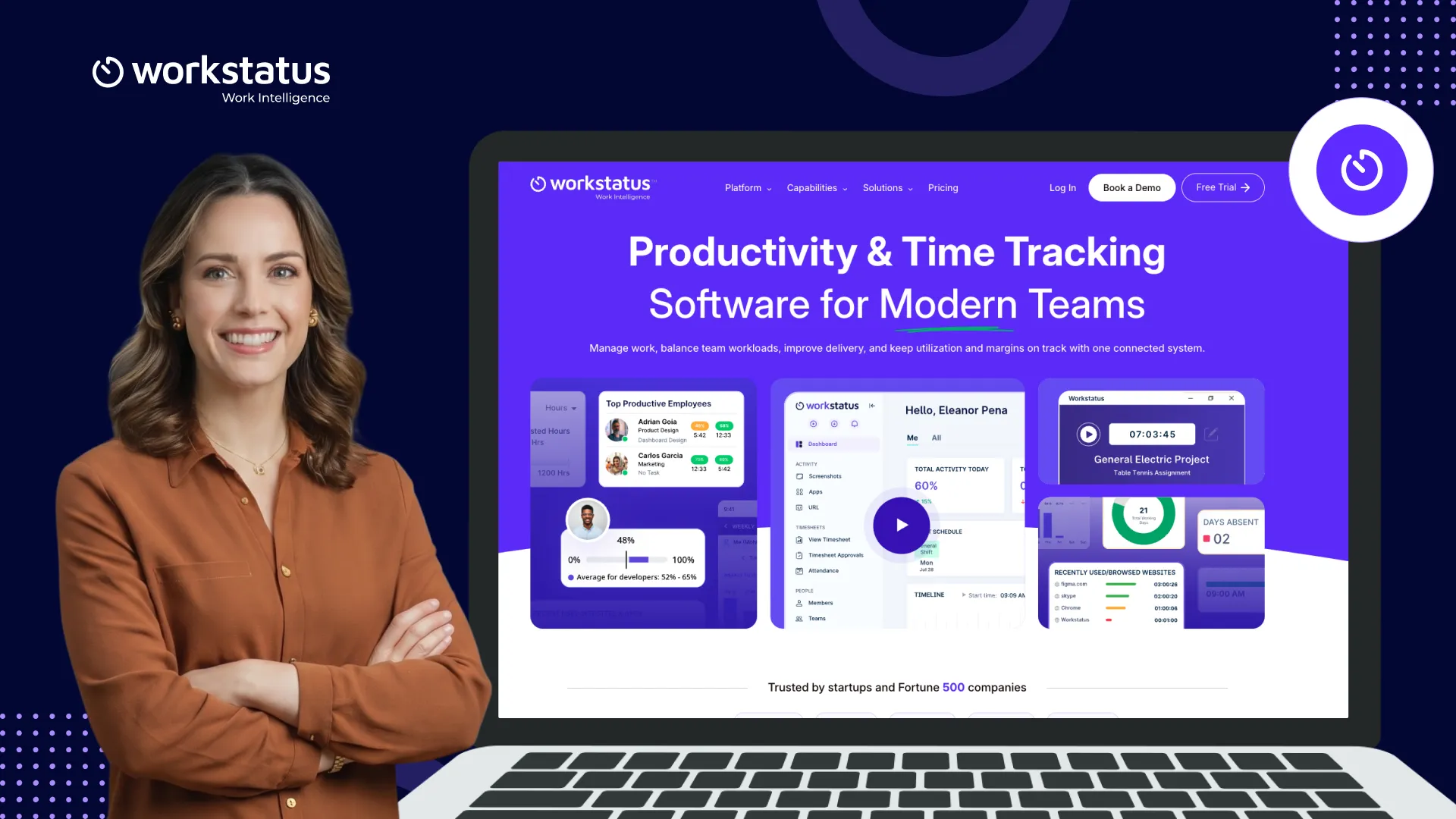
That’s where Workstatus helps; bringing billable visibility, timesheets, invoicing, payroll, and productivity insights together in one place.
FAQs
Ques: What is Time Intelligence?
Ans: Time Intelligence goes beyond tracking hours by analyzing time data to improve utilization, profitability, productivity, and delivery performance
Ques: How does Time Intelligence work?
Ans: Time Intelligence works by analyzing timesheets, billable work, payroll, and project data to improve utilization, profitability, and delivery efficiency
Ques: What’s the difference between Time Tracking and Time Intelligence?
Ans: Time Tracking records hours worked. Time Intelligence analyzes those hours to improve margins, utilization, and overall performance
Ques: What are the key benefits of time intelligence?
Ans: Time intelligence helps service businesses move beyond basic time tracking.
- Better billable visibility
- Smarter utilization insights
- Faster payroll and invoicing
- Turn work hours into smarter business decisions.
Ques: Which service firms should move to Time Intelligence?
Ans: Growing service firms need stronger margin control, utilization clarity, and better delivery visibility