
Table of Contents
Have you ever given a thought to why project margins keep reducing even when everyone is busy?
This is because being busy doesn’t guarantee equal results.
Employee monitoring can tell you who is working and for how long, but it fails to tell where time, effort, and profits are being lost.
In this blog, you’ll explore why employee monitoring fails to solve the 30% margin leakage problem and how service businesses should switch to productivity intelligence instead.
Let’s go!!
Understanding the 30% Margin Leakage Problem
Many service businesses lose profits without realizing it. Small issues in daily operations can slowly reduce margins over time.
- Billable hours are missed or not tracked properly.
- Project costs increase without being noticed.
- Too much time is spent on non-billable work.
- Resources are not used effectively.
- Project delays lead to extra costs.
These issues may seem small on their own, but together they can create significant margin leakage.
Understanding margin leakage in service businesses and where these leaks happen is the first step toward reducing them and protecting your project margins.
Top 5 Reasons Project Margins Leak
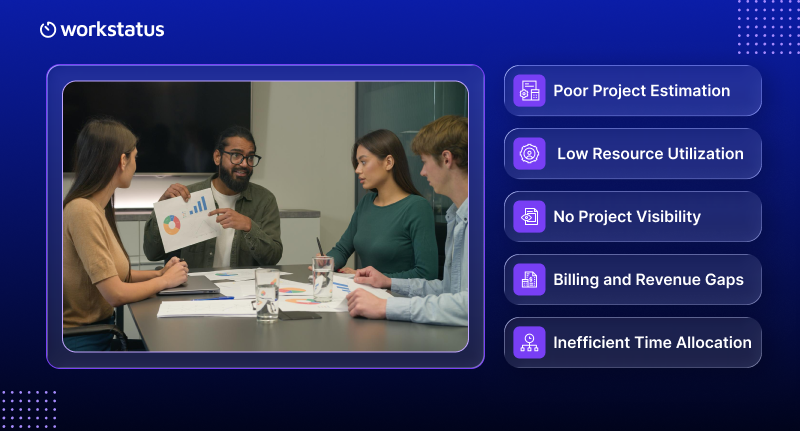
Margin leakage often happens through small operational issues that build up over time. Here are five common reasons businesses lose profits without realizing it:
1. Poor Project Estimation
- Project timelines are underestimated
- Resource needs are not planned correctly
- Extra work increases project costs
2. Low Resource Utilization
- Employees spend time on non-billable work
- Workloads are not balanced across teams
- Available capacity is not fully used
3. No Project Visibility
- Project risks are identified too late
- Budget overruns go unnoticed
- Team utilization lack real-time progress updates
4. Billing and Revenue Gaps
- Billable hours are missed
- Invoices are delayed
- Revenue opportunities are lost
5. Inefficient Time Allocation
- Too much time is spent in meetings
- Rework slows down project delivery
- High-value work gets less attention
Even small problems can significantly affect profit margins. Finding and addressing these issues can help companies ensure maximum utilisation of their money and resources.
Why Employee Monitoring Doesn’t Fix Margin Leakage
Many businesses think screen monitoring will help improve profits. But even when teams are active and working hard, project margins can still go down.
Here’s why employee monitoring alone is not enough:
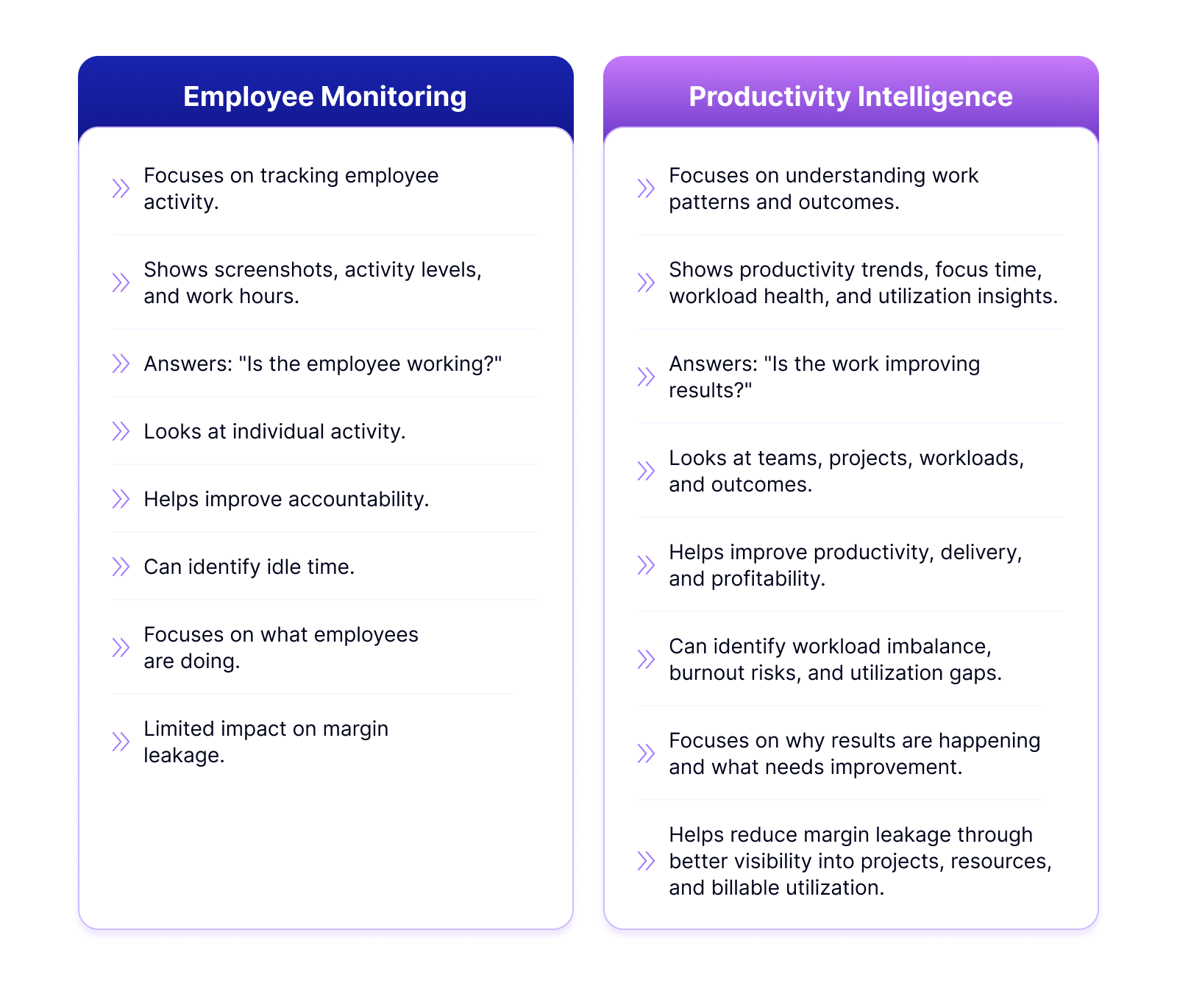
- It shows who is working, but not if the work is making money.
- It cannot tell you when billable hours are missed.
- It does not show when projects are going over budget.
- It gives limited visibility into how resources are being used.
- It cannot easily spot rework and process delays.
- It often misses the impact of non-billable work.
That is why user activity monitoring alone cannot stop margin leakage. To protect profits, businesses need a clear view of projects, resources, workloads, and where time is really being spent.
Employee Monitoring vs. Productivity Intelligence
How Productivity Intelligence Helps Reduce Margin Leakage
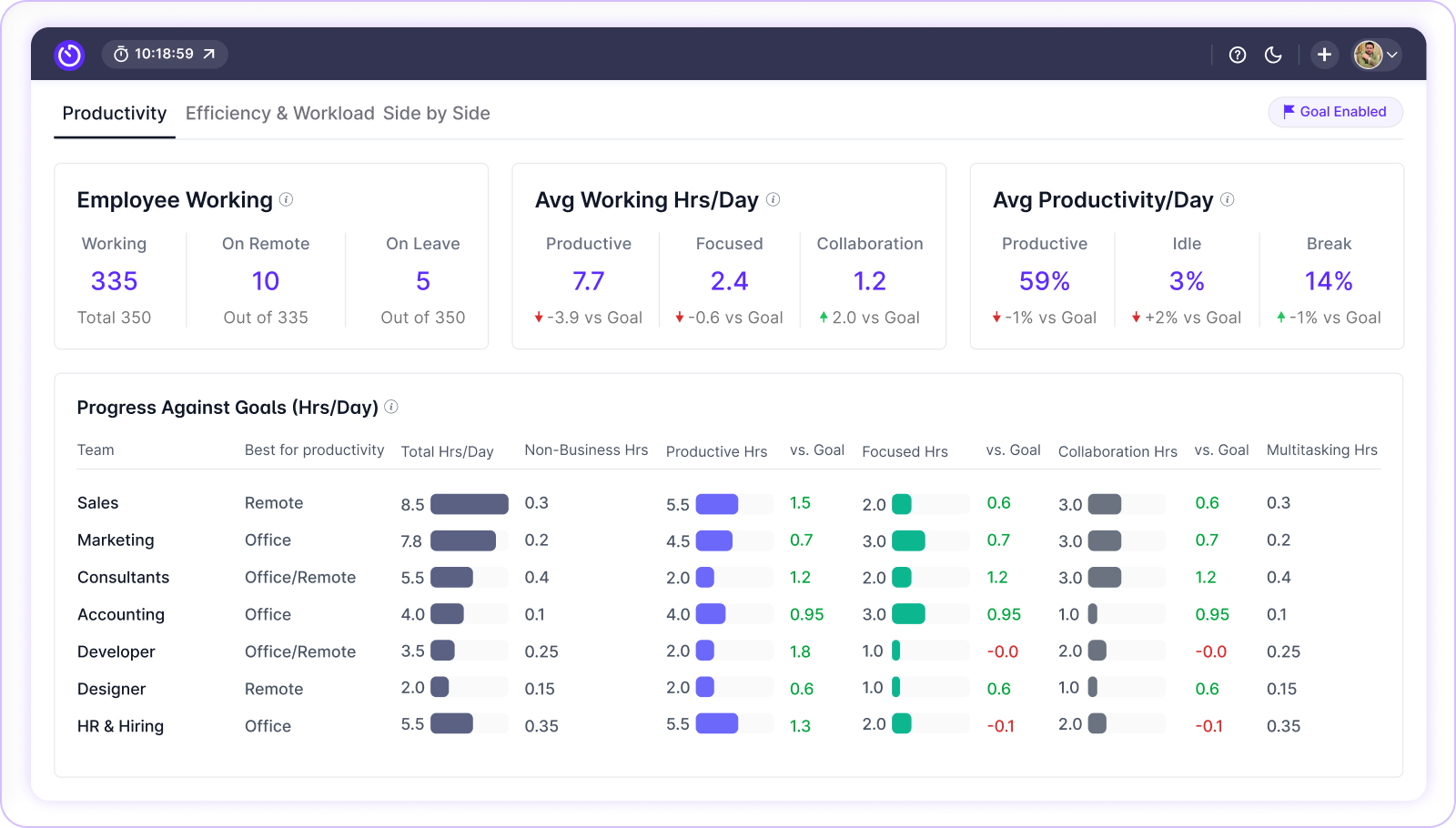
Productivity intelligence is the means for businesses to understand how time, resources, and projects impact profitability. It allows managers to identify problems as soon as they appear so that informed decisions can be made to resolve those issues before they escalate.
Resource Utilization
To improve margins, businesses need to make the best use of their resources.
- Shows how employee time is being used
- Identifies underused and overloaded resources
- Helps teams use resources more effectively
This helps businesses improve productivity without adding extra costs.
Project Profitability
Understanding project performance is important for protecting profits.
- Tracks the effort spent on each project
- Identifies projects that may be losing money
- Supports better project planning and pricing
This helps businesses focus on work that delivers better returns.
Capacity Planning
Good planning helps teams stay productive and organized.
- Shows who has available capacity
- Helps managers assign work more effectively
- Prevents employees from being overworked or underutilized
This ensures work is distributed more evenly across the team.
Billable vs. Non-Billable Work
Knowing where time is spent is key to improving margins.
- Separates billable work from non-billable tasks
- Shows how much time goes into each type of work
- Helps improve billable utilization
This helps businesses reduce time spent on work that does not generate revenue.
Project Delivery Health
Keeping projects on track is important for profitability management.
- Provides visibility into project progress
- Helps identify delays early
- Keeps projects within timelines and budgets
This reduces the risk of unexpected project costs.
Workload and Burnout Indicators
Balanced workloads help teams perform at their best.
- Identifies employees who may be overloaded
- Supports healthier work distribution
This helps maintain service business profitability while reducing burnout risks.
When businesses can clearly see how work affects projects and profits, they are better equipped to reduce margin leakage and improve overall performance.
Building a Margin-Focused Visibility Strategy
If you want to reduce margin leakage, the first step is to stop relying only on activity data. Instead, focus on getting visibility into the areas that directly affect project profits.
A margin-focused visibility strategy helps you understand where time is going, how resources are being used, and what is affecting project performance.
Here are a few areas to focus on:
- Track both billable and non-billable work
- Monitor resource utilization across teams
- Review project profitability regularly
- Identify workload imbalances early
- Keep an eye on project progress and delays
- Use data to make better planning decisions
The goal is not to monitor people more closely. The goal is to understand how work impacts profitability and where improvements are needed.
When businesses have clear visibility into projects, resources, and workloads, they can spot profit leaks faster, make smarter decisions, and build healthier, more profitable operations.
Conclusion
Employee monitoring shows activity, but it does not show what is affecting profits.
To reduce margin leakage, businesses need visibility into projects, resources, billable work, and team workloads.
That’s where Workstatus, a work intelligence platform, plays a valuable role. It gives businesses the insights they need to reduce wasted time, improve project profitability, and build stronger profit margins over time.
FAQs
Ques: What is margin leakage?
Ans: Margin leakage happens when a business loses profit because of issues like missed billable hours, project delays, poor planning, or inefficient use of resources.
Ques: Can employee monitoring improve profitability?
Ans: Employee monitoring can help track activity, but it does not always show why profits are increasing or decreasing.
Ques: What is productivity intelligence?
Ans: Productivity intelligence helps businesses understand how time, resources, and projects affect productivity and profitability.
Ques: Why is project visibility important?
Ans: Project visibility helps teams identify delays, budget issues, and resource gaps before they impact project results.
Ques: How can businesses reduce margin leakage?
Ans: Businesses can reduce margin leakage by tracking billable work, improving resource utilization, monitoring project health, and making decisions based on real-time insights.