
Table of Contents
You already use Trello to see what needs to be done, but wouldn’t it be even better to know how work actually happens across all your client boards?
That’s where Workstatus steps in as the missing layer of intelligence.
The Trello + Workstatus integration doesn’t just organize work; it turns everyday tasks into clear, business-ready insights.
Here’s what Trello + Workstatus brings to your agency:
- Real-time on Trello cards
- Clear productivity insights and visibility
- One view across all boards
- Accurate billing data
So, let’s dive in and see how Trello + Workstatus helps agencies turn busy boards into real business results.
Why Trello Alone Isn’t Enough for Agencies
Trello is great for organizing work. It helps teams see tasks and move work forward. But when agencies manage many clients at once, Trello alone can’t show the full picture.
Trello helps you:
- Organize tasks on simple boards
- See workflows using lists and cards
- Track task progress from start to finish
But Trello doesn’t tell you:
- How much real time is spent on each client
- Who is overloaded across different boards
- How productive the team is over time
- Where hidden delays are coming from
- When teams are getting tired or close to burnout
For agencies, moving cards isn’t enough. A Trello work management integration helps you see time, effort, and workload behind the work; beyond what Trello alone can show.
The Hidden Cost of Managing Multiple Client Boards
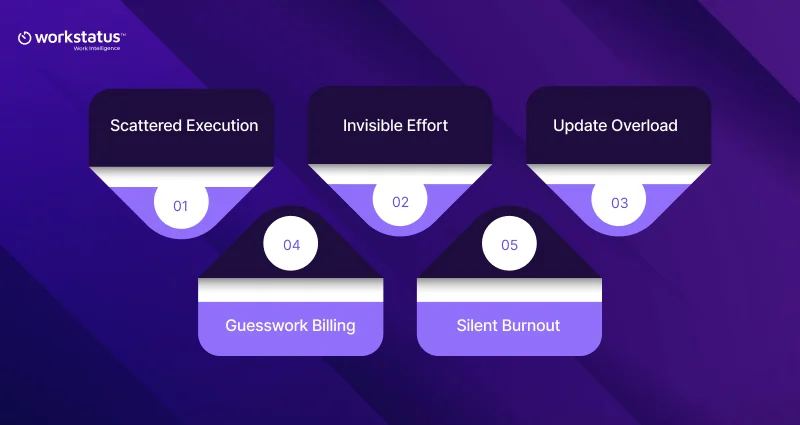
Managing many client boards looks organized on the surface, but behind the scenes, small gaps start turning into real business problems.
What agencies struggle with:
- 12+ client boards with no single place to see all work
- Clients asking for proof of what was actually done
- Managers depend on frequent status meetings for updates
- Billing based on rough estimates, not real effort
- Overloaded team members go unnoticed
These gaps don’t just slow teams down; they quietly cost agencies money, delay projects, and exhaust teams.
Without clear visibility, accountability becomes unclear, and margins start slipping.
What Changes When You Add Workstatus to Trello
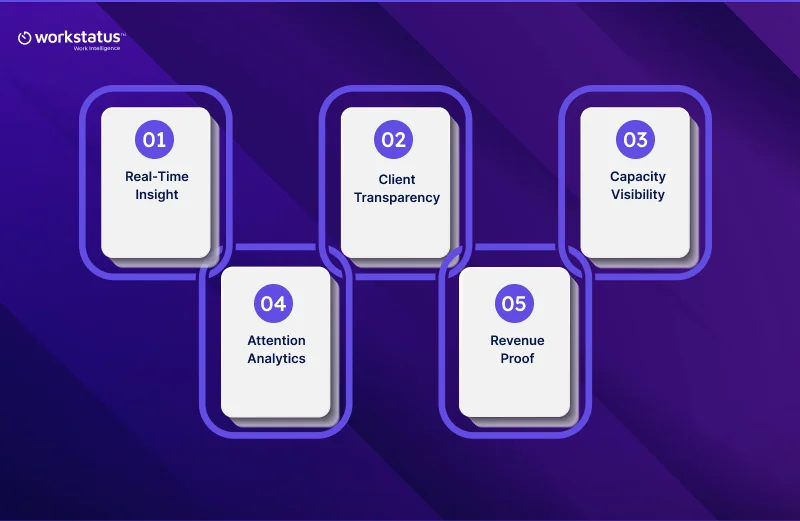
Trello helps you plan work. Workstatus shows you how that work actually gets done. When agencies use both together, planning and reality finally match.
Think of it this way:
- Trello = How work is organized
- Workstatus = How work actually happens
Together, agencies get:
- Real-time tracking on every Trello task
- Client-level productivity intelligence, not surface activity
- A true view of team workload across all boards
- Insight into focus time vs distractions
- Clear proof of work that supports accurate billing
With Workstatus added to Trello, agencies move from assumptions to facts. Every Trello card now shows real effort, real time, and real accountability.
How the Trello + Workstatus Workflow Looks
With Trello and Workstatus together, agencies keep their familiar workflow while gaining workflow intelligence that improves visibility, control, and decision-making.
Here’s the simple flow:
- All tasks continue to live in Trello boards
- Team members work on tasks the same way they always have
- While they work, Workstatus quietly tracks:
- Time spent on each task
- Activity during work hours
- Focus vs idle time
- Overall productivity
What managers get in real time:
- A clear view of who is working on what
- Actual time taken on each Trello task
- Early signs of delays and bottlenecks
- Better clarity without chasing updates
No extra steps. No new tools to manage. Workstatus simply adds work intelligence to Trello, so agencies can manage work with facts, not follow-ups.
Agency Use Cases

Every agency runs different work, but the chaos looks surprisingly similar. Here’s how Trello + Workstatus fits into real agency life.
Use Case 1: Marketing Agencies Managing Monthly Clients
Before integration:
Marketing teams used Trello to plan work, but billing was based on estimates. Some clients quietly used 20–30% more time than planned.
After Trello + Workstatus:
- Time is tracked directly on Trello tasks
- Managers see the real hours spent per client
- Proof of work is ready for billing and reviews
Result: Agencies reduce revenue leakage, improve billing accuracy, and protect margins by up to 10–15%.
Use Case 2: Design Agencies Handling Multiple Projects
Before integration:
Designers worked across many boards. Managers found overload only after deadlines slipped.
After Trello + Workstatus:
- Workload is visible across all Trello boards
- Real task effort is tracked automatically
- Managers rebalance work before delays start
Result: Project delays drop, delivery speed improves, and designer burnout reduces by 25%+.
Use Case 3: Development & Support Agencies Managing Ongoing Work
Before integration:
“Quick fixes” and support work piled up. Clients questioned timelines and bills.
After Trello + Workstatus:
- Time and activity are tracked per Trello card
- Bottlenecks become visible early
- Clear work records support billing and delivery
Result: Agencies cut status meetings, speed up delivery, and reduce billing disputes by 30–40%.
Business Impact for Agencies
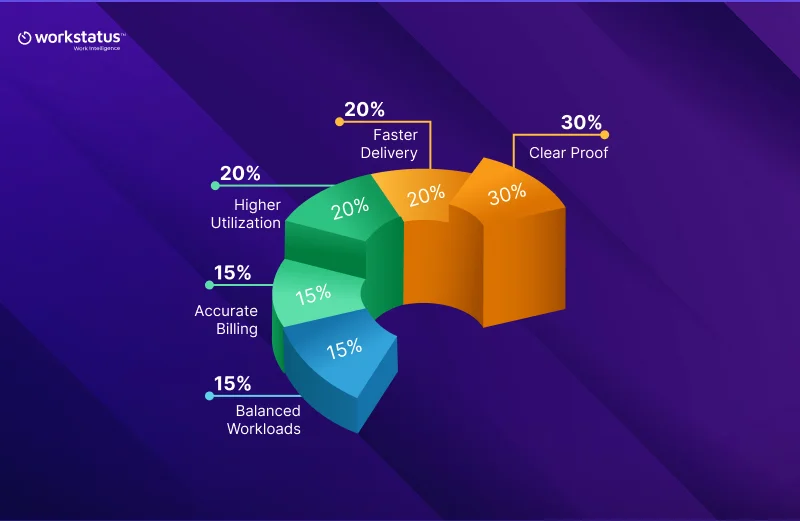
When agencies integrate Workstatus with Trello, the impact is visible in numbers, not opinions or status updates.
What the data shows:
- 15% improvement in billing accuracy by tracking real task time
- 20% fewer project delays with early visibility into bottlenecks
- 15% reduction in unplanned work through better workload visibility
- 30% fewer billing disputes with clear proof of work
- 20% improvement in team utilization across client projects
With real work data, agencies save money, deliver work faster, and grow without tiring their teams. Decisions are based on facts, not guesses, making the business stronger and more stable.
Why This Matters for Agency Leaders
When agencies manage many client boards, the real challenge isn’t task tracking; it’s running a profitable, predictable business without burning out teams.
Why this matters to the business:
Stop revenue leakage early
- Workstatus shows real effort per client, so margins don’t slip unnoticed.
Keep delivery predictable:
- Spot slowdowns across boards before deadlines are missed.
Turn work into billing proof:
- Share clear, defensible work evidence with every invoice.
Use capacity smarter:
- See overload early and rebalance work before burnout hits.
Scale without operational chaos:
- Fewer status meetings, more control as clients grow.
Workstatus and Trello Integration turn daily work into clear business insight. Leaders gain control over delivery, profits, and growth, without changing how their teams work.
Closing Thoughts
If work looks busy but answers feel unclear, that’s the gap Trello + Workstatus fills. You gain time intelligence that connects tasks, effort, and outcomes; clearly and simply.
- Revenue control
- Delivery predictability
- Capacity management
That’s how agencies grow with control, not chaos.
FAQs
Ques: How does Workstatus work with Trello?
Ans: Workstatus tracks time, activity, and productivity on Trello tasks while your team works as usual.
Ques: Do teams need to change how they use Trello?
Ans: No. Teams keep using Trello the same way. Workstatus runs in the background.
Ques: Can agencies track time for each client board?
Ans: Yes. Time is tracked per task, giving clear client-wise effort and billing data.
Ques: Will this help with billing accuracy?
Ans: Yes. Real task time and proof of work make billing clear and dispute-free.
Ques: Is this useful for agencies with many clients?
Ans: Absolutely. It gives one a clear view of work, time, and workload across all boards.