
Table of Contents
Service teams don’t lose revenue because they deliver less. They lose it because the work they deliver isn’t visible enough to defend.
Projects move fast, scope shifts quietly, and teams stay busy. But when it’s time to bill, the proof is scattered or missing.
Without proof of work, revenue starts leaking in familiar ways:
- Billable hours mix with internal work
- Client disputes delay or reduces invoices
- Fixed bids overrun without early signals
Proof of work changes this by connecting effort to outcomes, before it’s too late. It turns daily activity into defensible revenue.
With proof of work, service teams can:
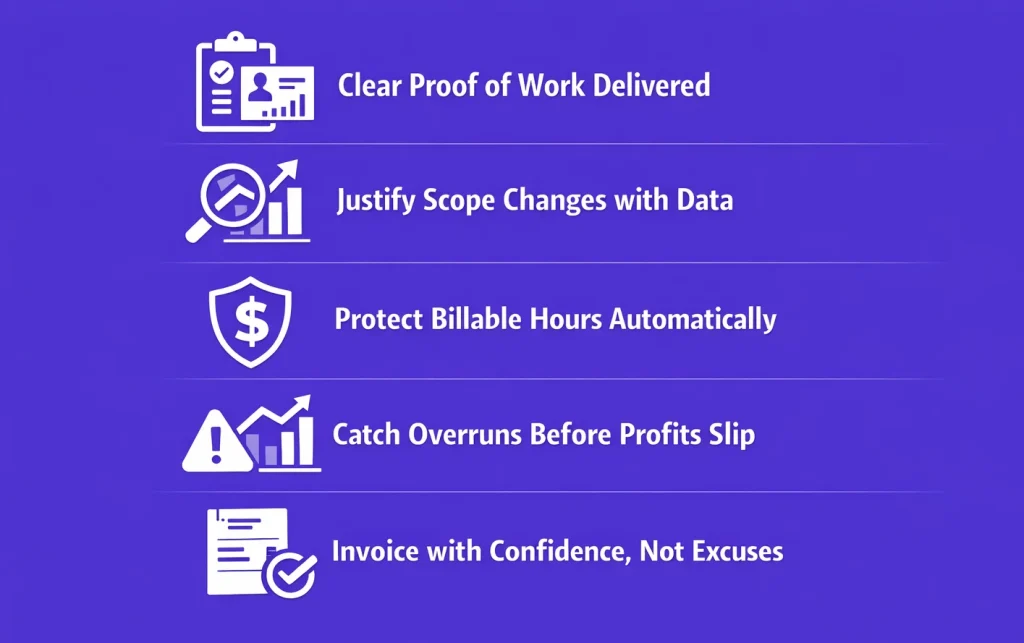
That’s how top service teams quietly defend 10–15% more revenue; not by working more, but by making work visible, provable, and trusted.
This blog outlines the practical ways proof of work helps teams lock in revenue they already earned.
The Hidden Revenue Loss in Service Businesses
Many service businesses lose money without noticing it. The loss happens when real work does not turn into real revenue.
Here’s why:
- No Billable hours proof, so the business earns less than it should
- Small tasks are ignored, even though they cost time and money
- Manual timesheets reduce billable value due to errors
- Invoices are lowered when proof of work is weak
- Leaders cannot see all billable work, so margins drop
These small losses add up over time. Clear proof of work for IT services helps protect revenue already earned.
Why Great Work Still Doesn’t Get Fully Paid
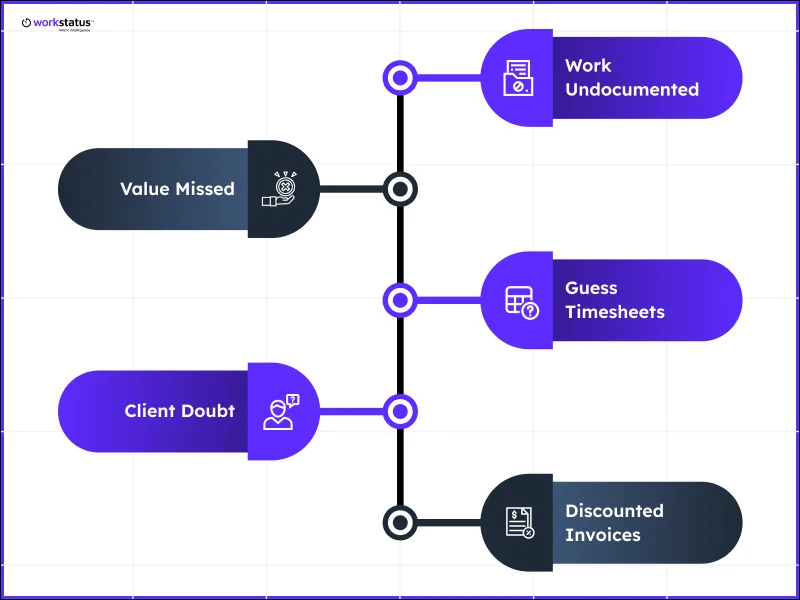
Service teams deliver strong results every day. But when that work isn’t clearly shown, it often doesn’t get fully paid.
Why does this happen?
- Valuable work is done, but not clearly documented
- Small efforts that add value never reach the invoice
- Timesheets capture estimates, not real activity
- Clients question bills when they can’t see the work
- Teams lower invoices to close payments faster
Great work alone is not enough to protect revenue. Proof of work turns effort into fully paid value.
What “Proof of Work” Really Means for Service Teams
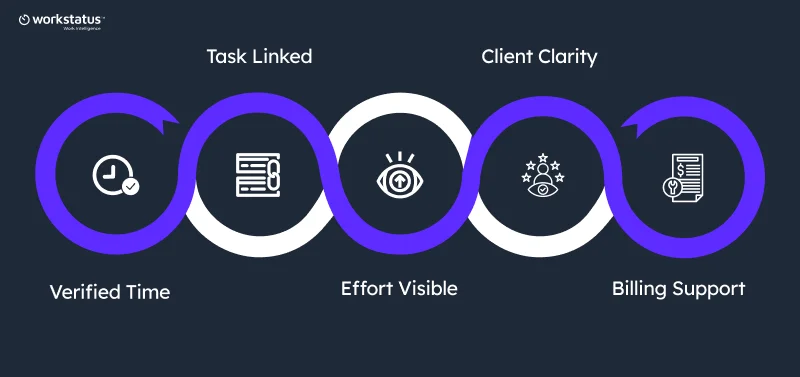
Proof of work helps service teams clearly show the value they deliver. It makes work easy to see, understand, and trust.
What proof of work includes:
- Clear records of time spent on real work
- Tasks and actions linked to each project
- Visible effort, not just total hours
- Simple details clients can review
- Support for every billed hour
When work is clear, billing feels fair. With time intelligence driving proof of work, service teams protect revenue and get paid faster.
How Proof of Work Protects 10–15% of Your Revenue
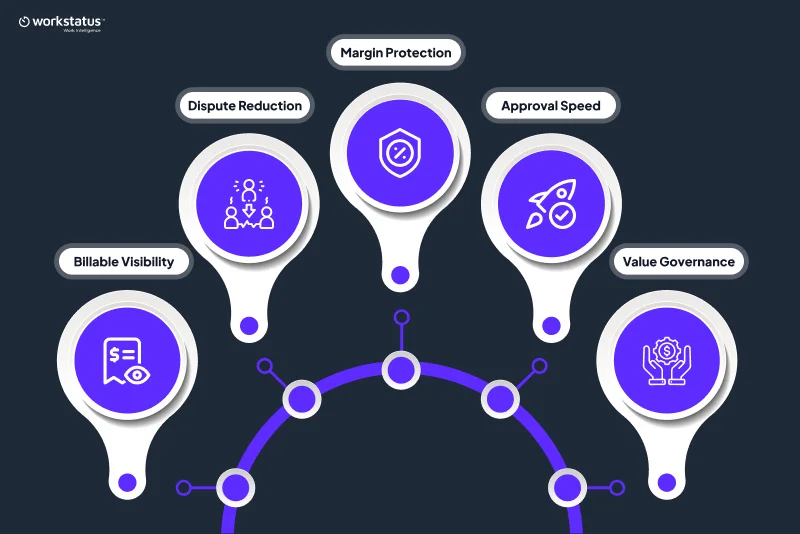
Proof of work helps turn delivered effort into protected income. Here’s how proof of work for agencies protects revenue:
- Captures billable work that usually gets missed
- Reduces invoice questions with clear work details
- Prevents discounts caused by weak explanations
- Helps clients approve bills faster
- Gives leaders clear control over billable value
When work is easy to prove, revenue is easier to protect. Proof of work helps service teams keep 10–15% more of what they earn.
And, this is exactly what Workstatus is designed to solve.
How Workstatus Turns Daily Work Into Defensible Revenue
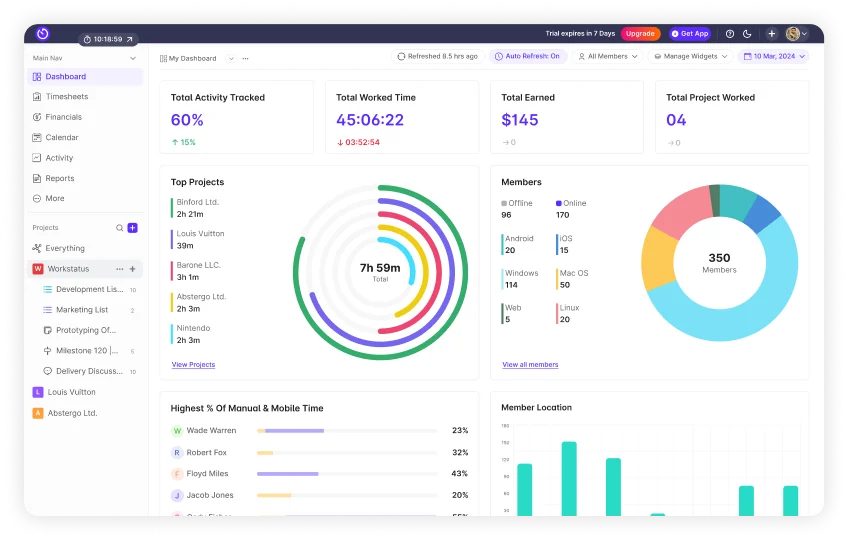
Workstatus is a work intelligence platform that turns daily effort into clear, defensible proof of work. It protects revenue, reduces billing pushback, and helps teams hold their margins.
Here’s how:
1. Transparent Time & Activity Records
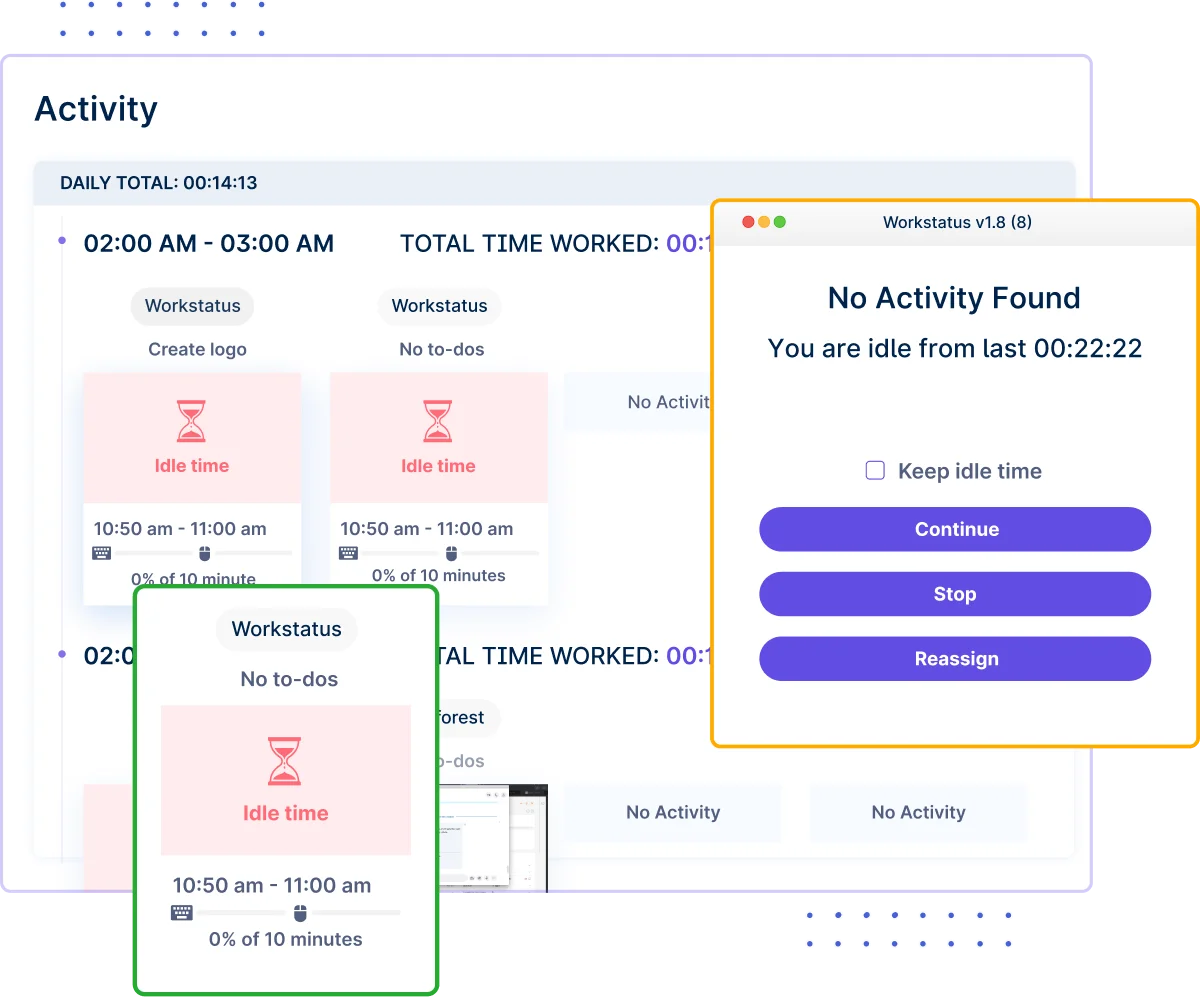
Missed or guessed hours weaken billing; real-time tracking records work exactly as it happens.
- Automatic tracking captures real working time
- Manual timesheet errors are removed
- Exact hours spent on client work stay visible
Bill what your team actually works, not what they try to remember later.
2. Proof of Work with Screenshots
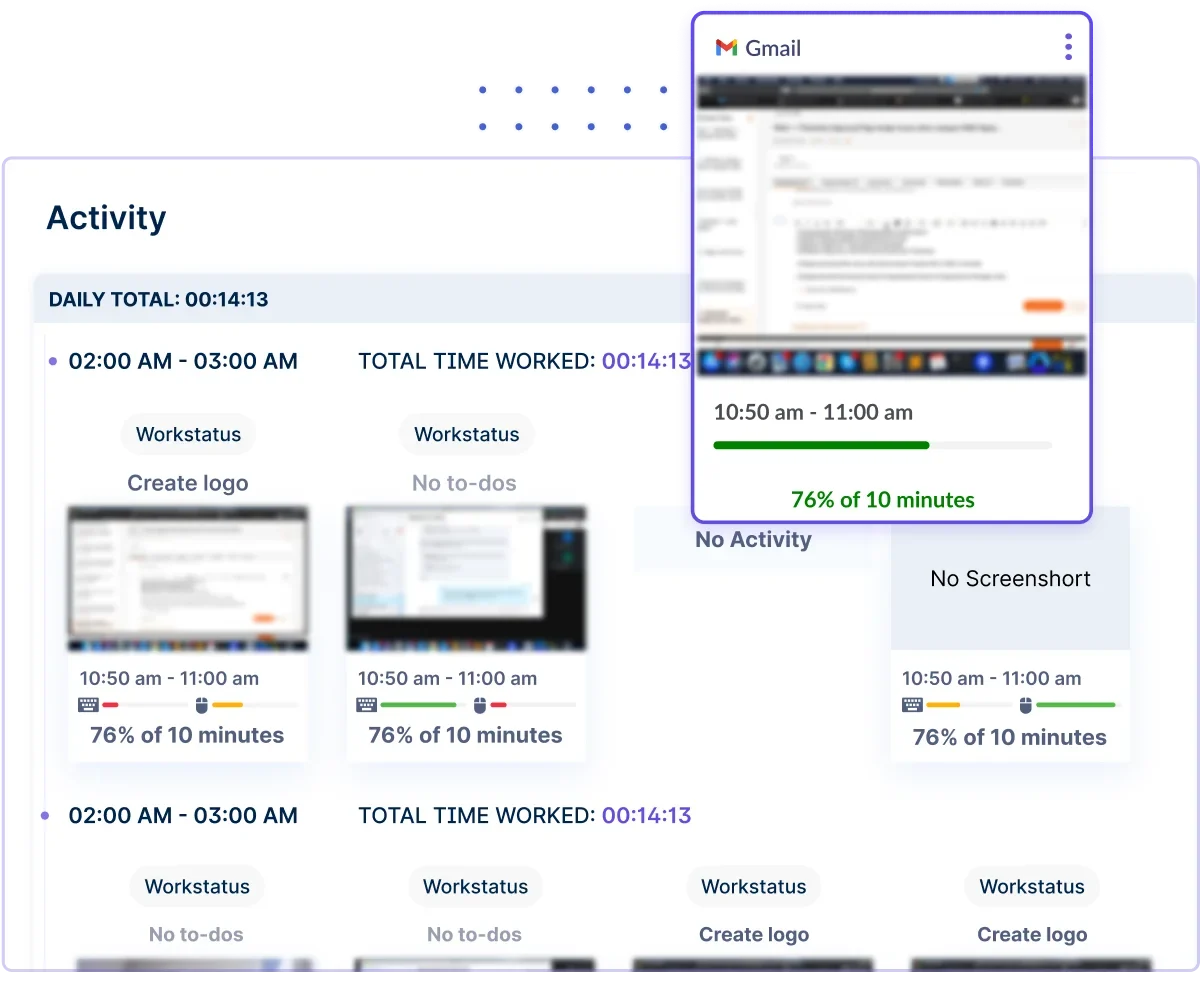
When effort is hard to explain, clients question invoices; visual proof removes doubt.
- Screenshots show real work during tracked hours
- Effort is clear without long explanations
- Fewer invoice disputes and write-offs
When clients see the work, they trust the bill.
3. Time & Activity Reports
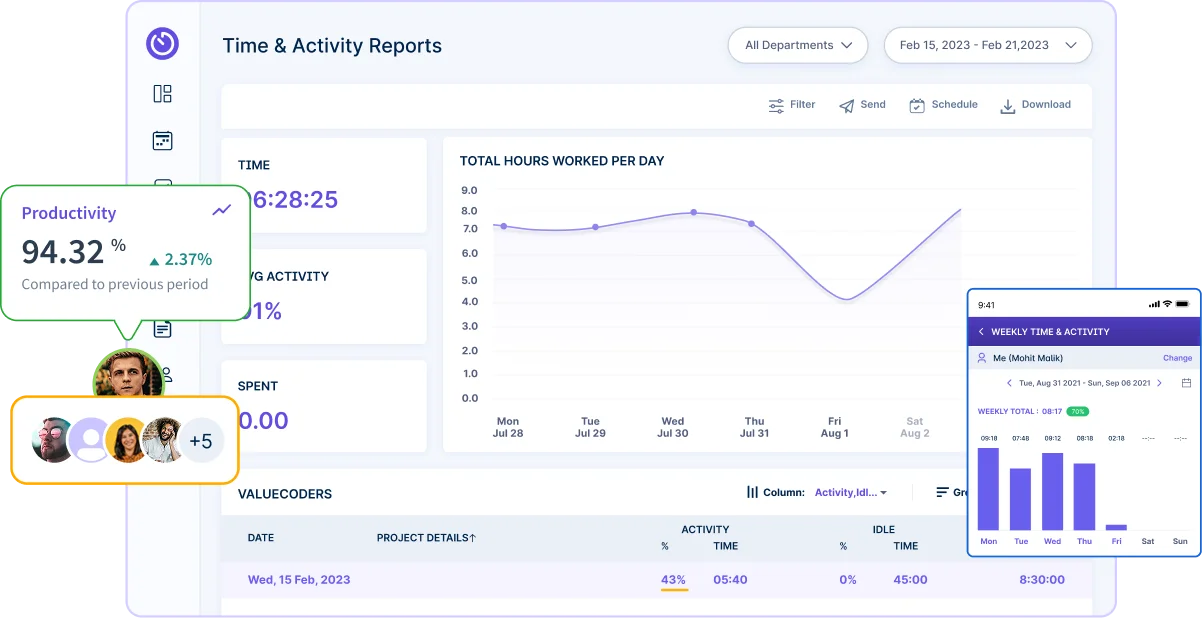
Scattered data weakens billing; clear reports connect work directly to revenue.
- Work is shown by project and task
- Reports are easy to share with clients
- Data supports every billed hour
Clear reports turn daily work into defensible invoices.
4. Verified Timesheets for Clients
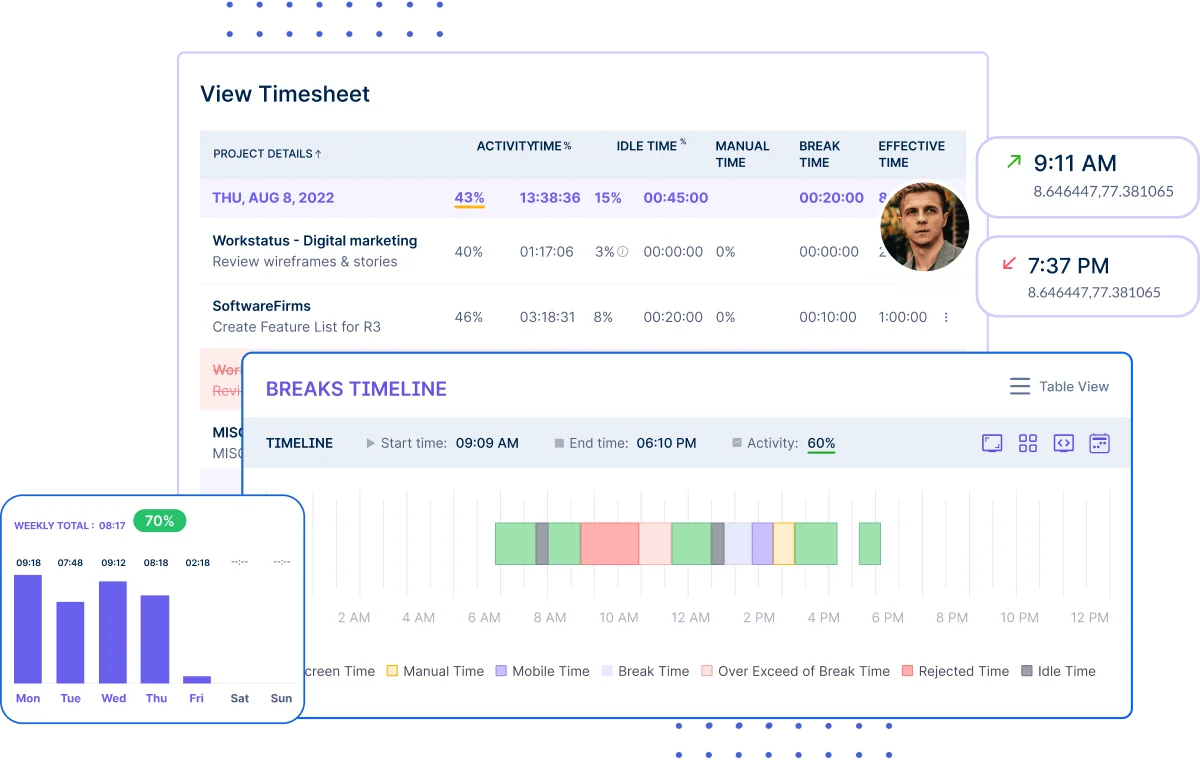
Unverified timesheets invite questions; verified activity builds confidence.
- Timesheets are linked to real work activity
- No unclear data or manual edits
- Clients review hours with clarity
Verified timesheets reduce pushback and speed up payments.
5. Team Activity Insights
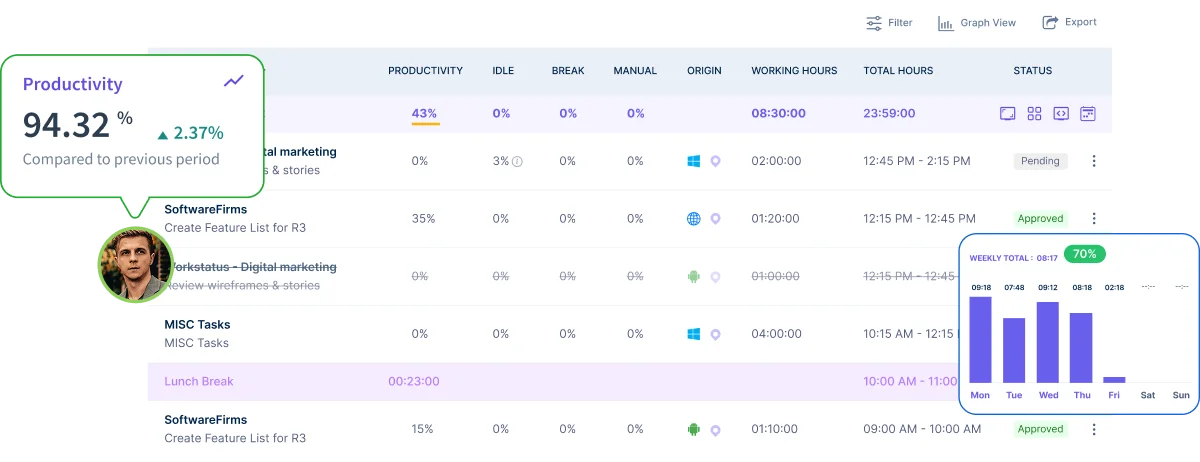
Hidden time loss hurts margins; insights reveal where billable value leaks.
- Shows how team time is actually spent
- Highlights missed or underused billable work
- Improves margins without adding headcount
Better visibility, driven by workflow intelligence, helps service teams protect the revenue they already earn.
Moving From “Time Tracking” to “Revenue Protection”
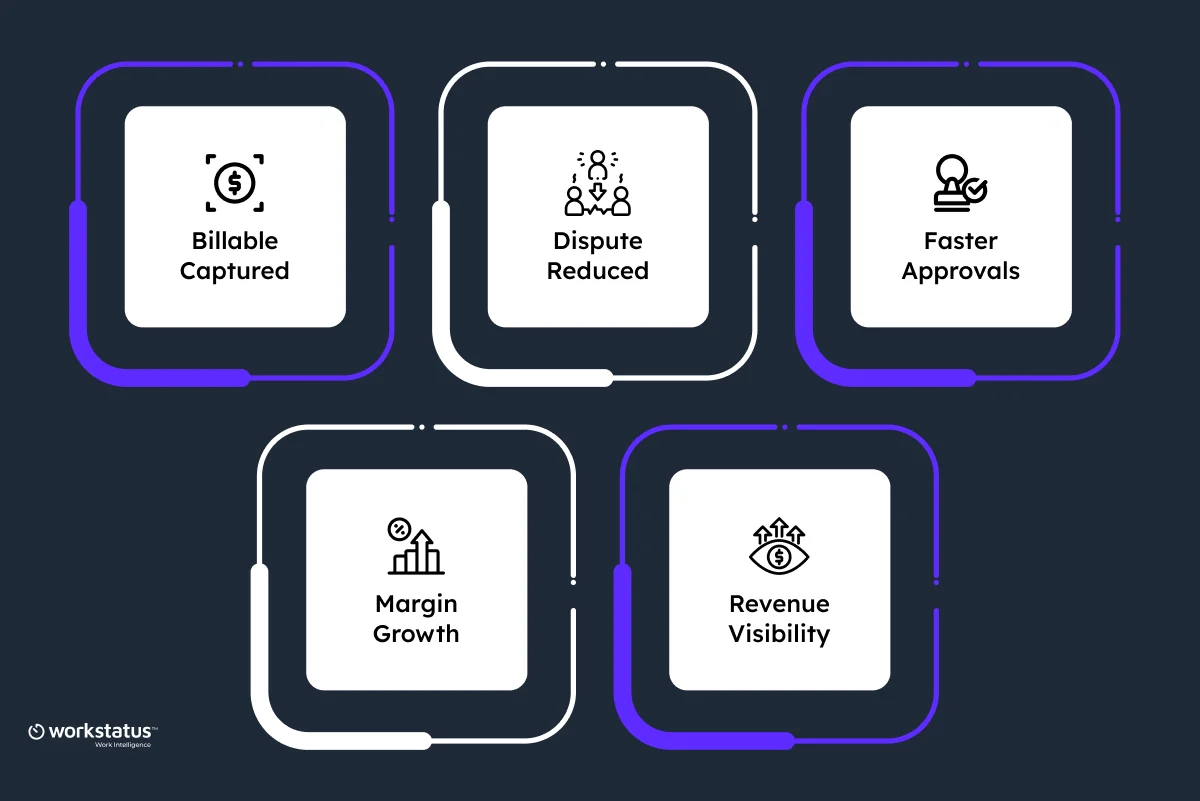
Service teams don’t lose revenue because they lack work. They lose revenue because the value of their work is not fully protected.
What changes when time data protects revenue:
- More billable work is captured instead of getting missed or forgotten
- Hours are supported with clear work details, reducing invoice disputes
- Clients approve invoices faster because the work is easy to understand
- Margins improve without adding new clients or extra team members
- Leaders see where revenue leaks happen and fix them early
Time tracking shows effort. Revenue protection ensures that effort turns into income.
Why Proof of Work Builds Client Trust
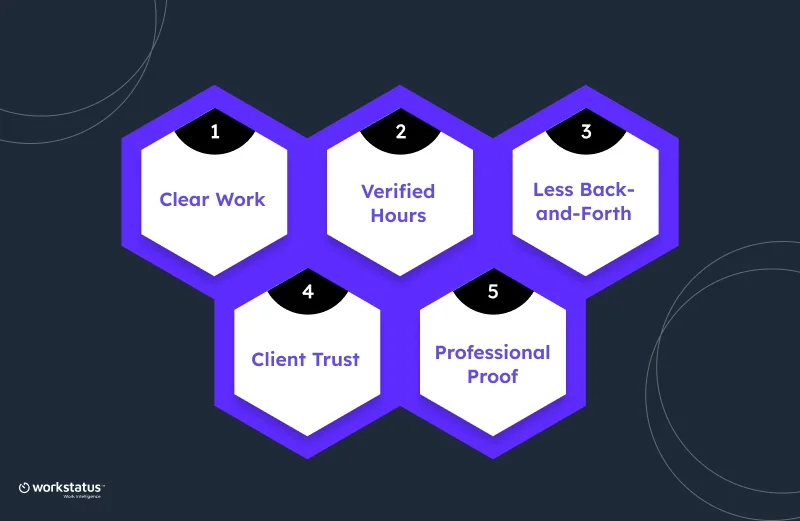
Clients trust service teams that are clear, not just confident. Proof of work for client billing helps them see the value behind every bill.
Here’s how proof of work builds trust:
- Clients can clearly see what work was done and when it was done
- Detailed work records remove doubt around billed hours
- Clear proof reduces back-and-forth during invoice reviews
- Fewer billing questions lead to smoother client relationships
- Transparency shows professionalism and accountability
When work is visible, trust grows naturally. Trusted work gets approved and paid faster.
How to Add Proof of Work Into Your Operations
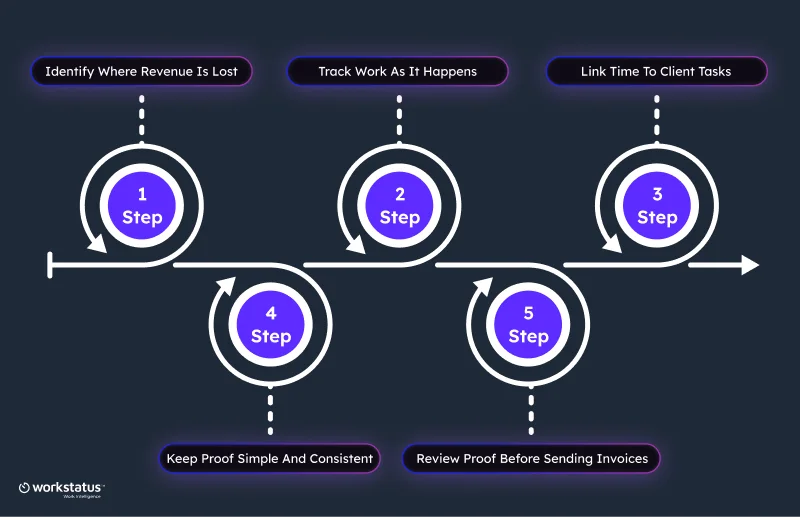
Adding proof of work is not about changing how teams work. It’s about making their work visible, provable, and billable.
Steps service teams can follow:
Step 1: Identify Where Revenue Is Lost
- Review past invoices and disputes to find where billable work was missed or questioned.
Step 2: Track Work as It Happens
- Move away from manual timesheets and capture work in real time as teams work.
Step 3: Link Time to Client Tasks
- Make sure every hour is connected to a project, task, or client outcome.
Step 4: Keep Proof Simple and Consistent
- Use clear activity records and reports that are easy for clients to understand.
Step 5: Review Proof Before Sending Invoices
- Check work data weekly so billing issues are fixed before invoices go out.
Proof of work works best when it is part of daily operations. Service teams that add it early protect revenue without extra effort.
Calculate Your Revenue Leakage From Untracked Work
Conclusion
Service teams don’t lose revenue because they lack effort. They lose it because their work isn’t clearly shown.
With Workstatus, proof of work turns time and tasks into clear productivity and project insights.
Teams see where effort goes, projects stay on track, and every billable hour is easy to defend. When work is visible, billing is clear. And, clear billing gets paid faster.
FAQs
Ques: What is proof of work for service teams?
Ans: Proof of work shows what work was done and when it was done. It helps teams clearly explain their work to clients.
Ques: How does proof of work help protect revenue?
Ans: It helps teams track all billable work and avoid missed hours. This keeps more earned money from being lost.
Ques: Will proof of work feel like micromanagement?
Ans: No. Proof of work focuses on the work, not watching people. It helps teams show their effort clearly.
Ques: Does proof of work improve client trust?
Ans: Yes. When clients can see the work, they trust the bill more. This leads to fewer questions and faster payments.
Ques: How fast can teams see results?
Ans: Most teams see fewer billing issues in the first few weeks. Clear work records make billing easier right away.
Ques: How can service businesses recover lost revenue without increasing headcount?
Ans: By improving visibility into how time is spent and identifying untracked or underreported work. With better time capture, utilization tracking, and project visibility, service firms can recover billable hours already being worked, increasing revenue without hiring more people.